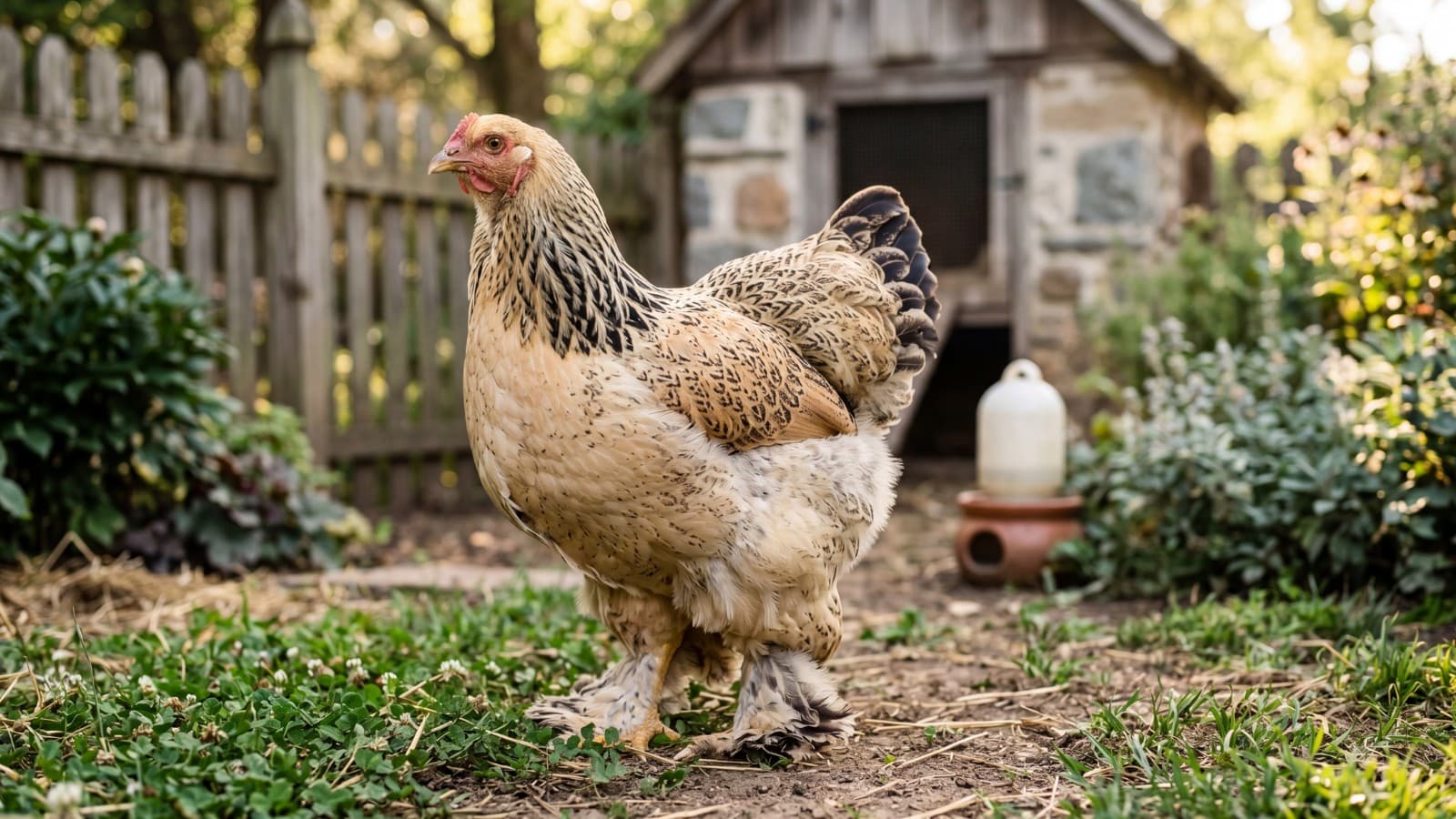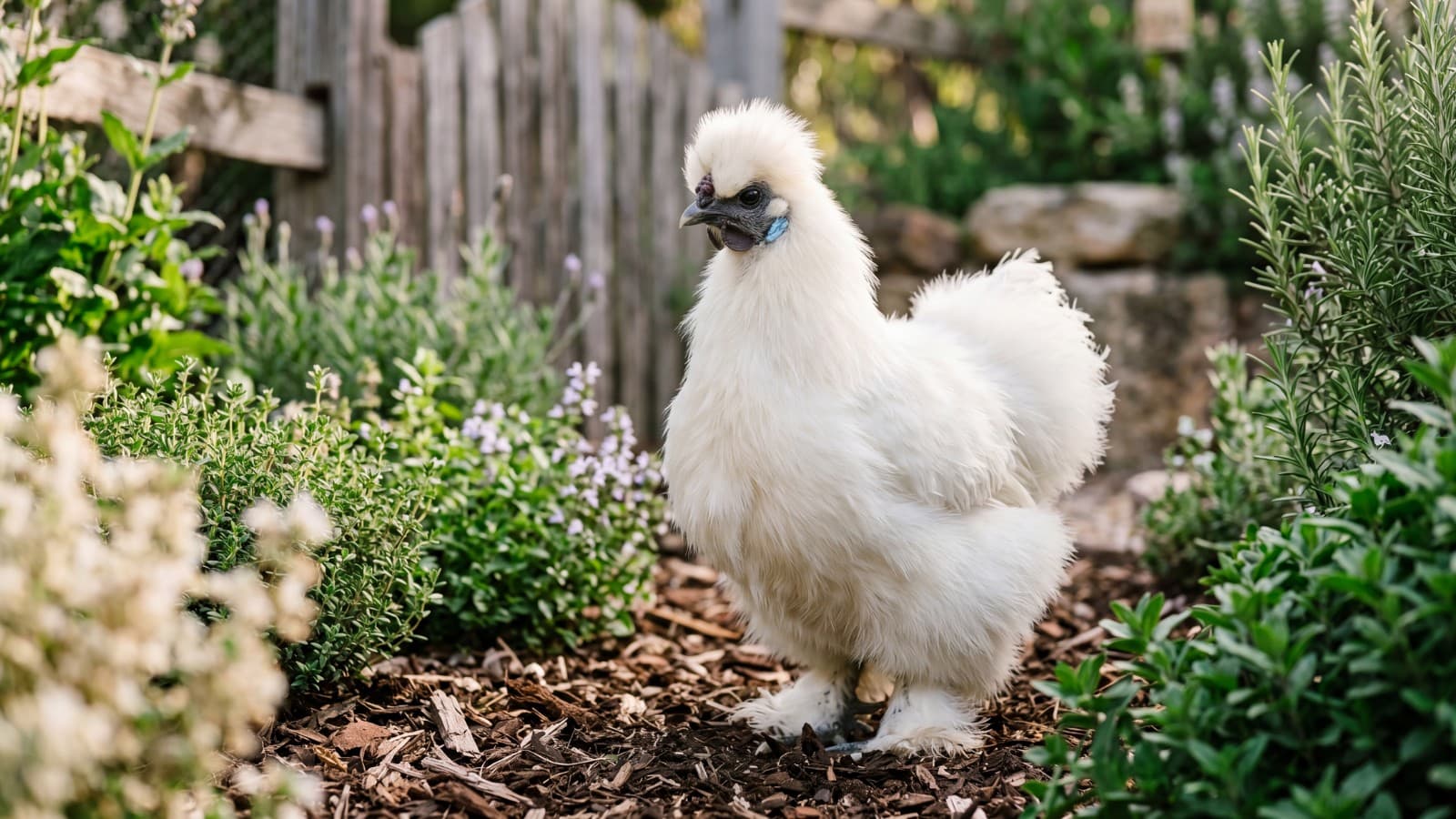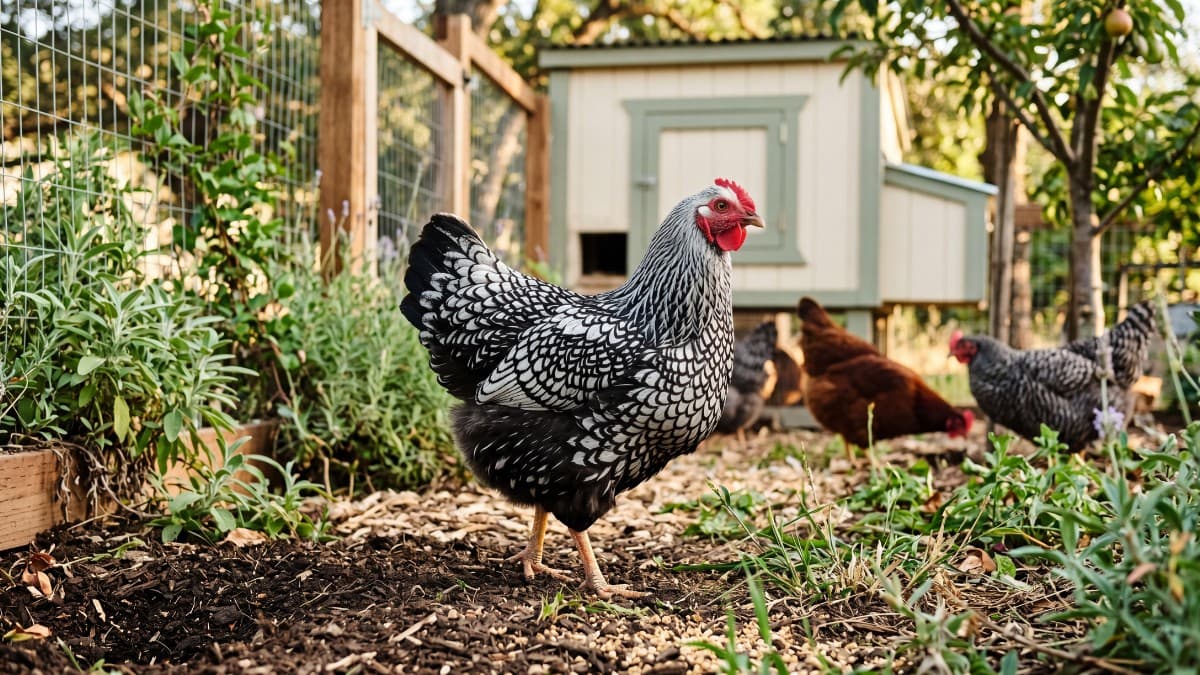
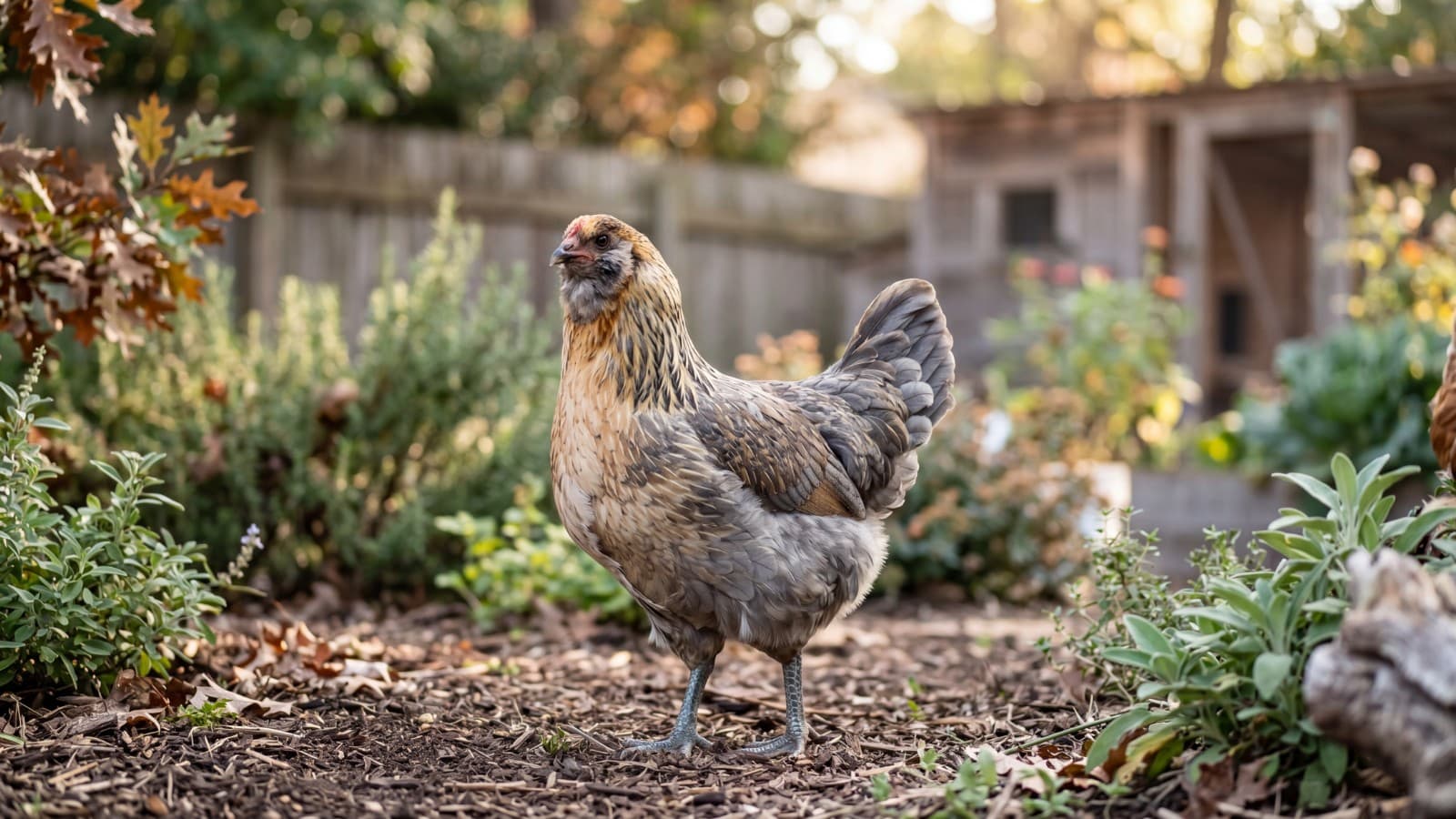
The Easter Egger chicken is the colorful-egg bird most beginners actually want when they say they want an “Ameraucana.” They are friendly, hardy, productive, and genuinely fun to keep. This guide covers what an Easter Egger chicken really is, what to expect from the eggs and the bird, and how it compares to similar breeds. For a broader look at backyard breeds, see our chicken breeds overview.
Easter Egger chicken at a glance
- Class: Hybrid, not a recognized breed
- Hen weight: 4 to 5 pounds
- Rooster weight: 5 to 7 pounds
- Egg color: Blue, green, pink, or cream (one color per hen for life)
- Eggs per year: 200 to 280
- Egg size: Medium to large
- Starts laying: 20 to 24 weeks
- Cold hardy: Very good (pea comb)
- Heat tolerance: Good
- Broodiness: Low
- Lifespan: 6 to 10 years
- Common look: Muffs, beard, pea comb, slate legs
What an Easter Egger chicken is
An Easter Egger is not a true breed. It is any chicken that carries the blue-egg gene from Ameraucana or Araucana ancestry, crossed with another breed. Hatcheries often sell them under breed-like names such as “Americanas,” “Easter Eggers,” or “Rainbow Layers.” They are hybrids, which means chicks from your Easter Egger hens may lay different egg colors than their mothers.
The upside is straightforward. You get hardy birds with colorful eggs at the price of any common backyard chick, often less than half what purebred Ameraucanas cost. For most backyard flocks, an Easter Egger chicken delivers the colorful-egg experience without breeder prices.
Easter Egger chicken egg color
Egg color is the main reason most keepers buy Easter Eggers. Each hen lays one color her entire laying life. The shade is set by genetics, and you will not know exactly what color a pullet will lay until she lays her first egg.
What you can expect from the basket:
- Blue: The most common Easter Egger egg color. Soft sky blue to deeper teal.
- Green: Also very common. Sage green, mint green, or olive depending on the cross.
- Pink or rose: Less common. A pale, dusty pink-cream tone.
- Cream or light brown: Some Easter Eggers inherit more of the brown-egg parent and lay tinted eggs without the blue.
A small flock of three or four Easter Eggers usually gives you a multi-color basket: a couple of blues or greens, often one softer pink or cream layer, sometimes a tinted brown. Egg color does not affect taste, nutrition, or shell strength. For more on what shapes laying, see our egg laying overview.
Easter Egger chicken egg production
Most Easter Egger chickens are productive layers. Expect 4 to 5 eggs per week through the main season, with annual totals landing in the 200 to 280 range. That puts them in the same tier as Buff Orpingtons and Wyandottes, slightly behind high-output breeds like Leghorns and Australorps.
- Pullets start laying: 20 to 24 weeks. A bit later than Leghorns or Plymouth Rocks, but earlier than Brahmas or Silkies.
- Peak production: First and second laying year.
- Year-over-year decline: Roughly 15 to 20 percent each year after the second laying year.
- Winter laying: They slow down with shorter days like most backyard breeds, but the pea comb shrugs off cold better than single-comb layers.
- Broodiness: Low. Easter Eggers rarely sit on a clutch, so they keep laying steadily.
For broader laying expectations and what changes a hen’s output, see our guides on how many eggs a chicken lays a day and when chickens start laying eggs.
Easter Egger chicken colors
Because Easter Egger chickens are hybrids, plumage varies widely. Two pullets from the same hatch can look very different. Common features that show up across most Easter Eggers include:
- Muffs and beard. Soft cheek feathers and a small chin tuft. Inherited from the Ameraucana side.
- Pea comb. Small and tight against the head. Resists frostbite better than a tall single comb.
- Slate or willow legs. Dark gray-blue legs are common, though some birds have lighter legs.
- Round, medium body. Easter Eggers are comfortable, well-balanced birds rather than tall or extreme.
Common color patterns include:
- Wheaten and partridge (warm rusty browns)
- Black and black-with-gold-hackles
- White or near-white plumage
- Splash and salt-and-pepper mixes
- Lavender and self-blue tones
- Silver, gold, and tri-color blends
Black Easter Egger chickens
Black Easter Eggers are common at hatcheries and a popular backyard look. Their plumage is mostly solid black, often with a green or beetle-green sheen in sunlight. Many still have the classic muffs, beard, pea comb, and slate legs that mark a typical Easter Egger.
What to know about black Easter Egger chickens:
- Black plumage absorbs more sun, so make sure shade and cool water are available in hot summers.
- Egg color from a black Easter Egger is usually blue or green, though pink or cream is possible. The plumage color does not predict egg color.
- Their dark feathers can hide mites or feather damage. Make a point of inspecting under the wings and around the vent during regular checks. See our chicken mites guide.
- Hardiness, temperament, and laying are otherwise similar to other Easter Eggers.
White Easter Egger chickens
White Easter Eggers are less common than dark-feathered birds but show up at most major hatcheries. Plumage is white or near-white, sometimes with a small amount of cream or gray shading on the hackles or tail. White Easter Eggers usually carry the same muffs, pea comb, and slate legs as other Easter Eggers.
What to know about white Easter Egger chickens:
- White plumage is genetically related to white-feathered parent breeds. Egg color from a white Easter Egger is still most often blue or green.
- White birds are easier to spot at dusk, both for you and for predators. Make sure your run and coop are predator-proof. See chicken wire vs hardware cloth.
- White feathers show stains faster than dark plumage. Keep the run drained and the coop clean to keep feathers looking their best.
- Their behavior, hardiness, and laying are otherwise typical for the line.
Easter Egger chicken temperament
Easter Egger chicken temperament is one of the breed’s biggest selling points. Most are friendly, curious, and not pushy. They mix well with other calm breeds, forgive new keepers’ mistakes better than most production breeds, and tend to settle in the middle of the pecking order rather than running it.
Personality varies more than in true breeds. Some Easter Eggers are downright cuddly and follow keepers around the run. Others are independent foragers that prefer their own company. Children-friendly, in most cases, with respectful handling.
For more breeds with a similar gentle reputation, see our friendliest chicken breeds guide.
Easter Egger chicken size
Easter Egger chicken size is medium for a backyard breed. Standard Easter Eggers are not as heavy as Brahmas or Cochins and not as small as a true bantam.
- Standard hen: 4 to 5 pounds at maturity.
- Standard rooster: 5 to 7 pounds.
- Bantam Easter Eggers: Around 1.5 to 2.5 pounds. Less common, mostly sold by smaller breeders.
Their medium size means standard backyard space rules apply. Plan for 4 square feet of coop space per bird and 8 to 10 square feet of run space. They handle confinement well, but they are reasonable fliers, so a covered run helps in tighter backyards.
Easter Egger hen vs rooster
Telling an Easter Egger hen from a rooster gets easier as birds mature. By 12 to 16 weeks, most differences are clear.
- Size: Roosters are typically 1 to 2 pounds heavier and stand a bit taller.
- Comb and wattles: Rooster combs and wattles grow larger and redder earlier. Hens stay smaller and paler until laying age.
- Hackle and saddle feathers: Roosters develop long, pointed feathers along the neck (hackles) and lower back (saddles). Hens have rounder, shorter feathers in those spots.
- Tail feathers: Roosters have longer, curved sickle feathers. Hens have shorter, fan-shaped tails.
- Spurs: Roosters grow visible leg spurs. Hens may have small bumps but rarely real spurs.
- Behavior: Roosters often watch the flock, crow, and intervene during predator scares. Hens forage and socialize.
Egg laying: Only Easter Egger hens lay eggs. Roosters do not lay or contribute color genetics through laying. They are needed only if you want fertile eggs to hatch.
Local rules: Most cities ban roosters in residential areas because of crowing. For a backyard flock, a hen-only Easter Egger group works perfectly. Hens lay just fine without a rooster.
Climate, coop, and care
Easter Egger chickens are some of the easiest backyard birds to care for. Their pea comb resists frostbite, their tight feathering handles cold, and they tolerate heat reasonably when shade and water are available.
- Coop space: 4 square feet per bird inside, 8 to 10 square feet of run space per bird. See what should be inside a chicken coop for inside layout.
- Roosts and nest boxes: Standard heights work fine. Easter Eggers will use the highest perch in the coop overnight.
- Predator protection: Hardware cloth on every opening, real predator latches, locked at sundown.
- Run cover: A covered or netted run helps with overhead predators and reduces accidental flyovers.
- Feed: Layer feed plus free-choice oyster shell once they start laying. See our chicken feed guides and what do chickens eat for the full picture.
- Water: Constant access to clean water.
- Cold weather: Dry coop and good ventilation matter more than added heat. Easter Eggers handle real winters well.
- Hot weather: Shade, cool water, and good airflow at roost level.
For broader coop setup details, see our chicken coops guides.
Easter Egger vs Ameraucana
The Easter Egger and the Ameraucana get mixed up constantly. The short version: every Ameraucana lays blue eggs, but not every blue-egg chicken is an Ameraucana.
- Ameraucana: A recognized breed. Comes in specific accepted color varieties (Black, Blue, Buff, Silver, White, Wheaten, and a few others). Lays only blue eggs. Sold by smaller breeders, harder to find at most hatcheries, and significantly more expensive per chick.
- Easter Egger: A hybrid that carries the blue-egg gene from Ameraucana or Araucana ancestry. Plumage and exact body shape vary widely. Eggs are most often blue or green, sometimes pink or cream. Affordable, hardy, easy to find at any hatchery.
For most backyard flocks, an Easter Egger is the practical choice. Buy from a recognized breeder if you specifically want a true Ameraucana for showing or breeding.
Easter Egger vs Olive Egger
Olive Eggers are a deliberate cross between a blue-egg breed (Ameraucana, Araucana, or Easter Egger) and a dark-brown-egg breed (Marans or Welsummer). The blue and dark brown shells combine to produce olive green eggs.
- Olive Egger eggs: Olive green, with shade varying from pale sage to deep moss.
- Easter Egger eggs: Most often blue or green, sometimes pink or cream.
- Plumage: Both vary widely, since both are hybrids. Olive Eggers often show traits of their darker parent (mottled feathers, dark legs).
A backyard flock with two or three Easter Eggers and one Olive Egger gives a particularly colorful basket: blues, greens, olives, and the occasional pink or cream. For the full Olive Egger profile, see our Olive Egger chicken guide.
Pros and cons
Pros: Friendly personalities, colorful eggs, very cold-hardy, productive layers (200 to 280 eggs per year), affordable at any hatchery, beginner-forgiving, low broodiness keeps them laying.
Cons: Do not breed true (chicks may lay different colors), not a recognized show breed, can be a bit flighty in tight runs, plumage and egg color cannot be picked ahead of time.
Who Easter Eggers are best for
- Beginners who want colorful eggs without paying breeder prices.
- Families who want one or two of these alongside calmer breeds.
- Cold-climate keepers who want a hardy, productive layer.
- Mixed flocks where you want variety in the egg basket.
- Anyone who likes the surprise factor of seeing what color a new pullet will lay.
For more beginner-friendly breed picks and high-output comparisons, see best chickens for beginners and best chicken breeds for eggs.
Easter Egger chickens are an excellent choice for most beginner flocks and one of the easiest ways to get a colorful egg basket. If you want printable daily care, egg collection, and flock record checklists for your new flock, the Chicken Homestead Checklist Bundle covers all of it.
Frequently Asked Questions
Quick, practical answers to common questions about feeding this to chickens.
About the Author

Amy Schmelter is a lifelong chicken keeper raising a large flock in Florida and the author of the upcoming book What I Wish I Knew Before Getting Chickens. She started Chicken Homestead to share what actually works.
Disclosure
Some links on Chicken Homestead may be affiliate links. We only recommend products we’d use ourselves. See our affiliate disclosure for details.