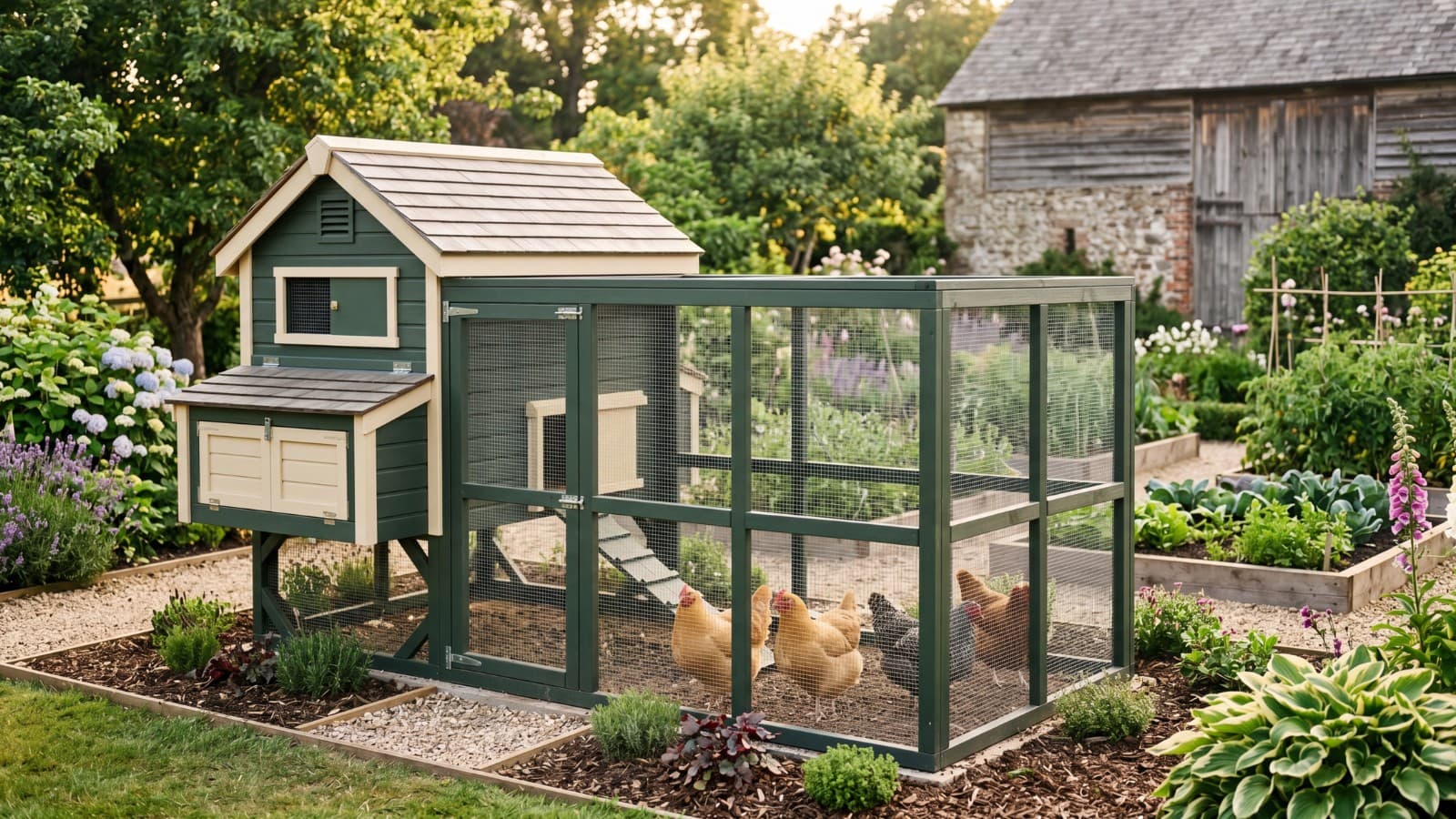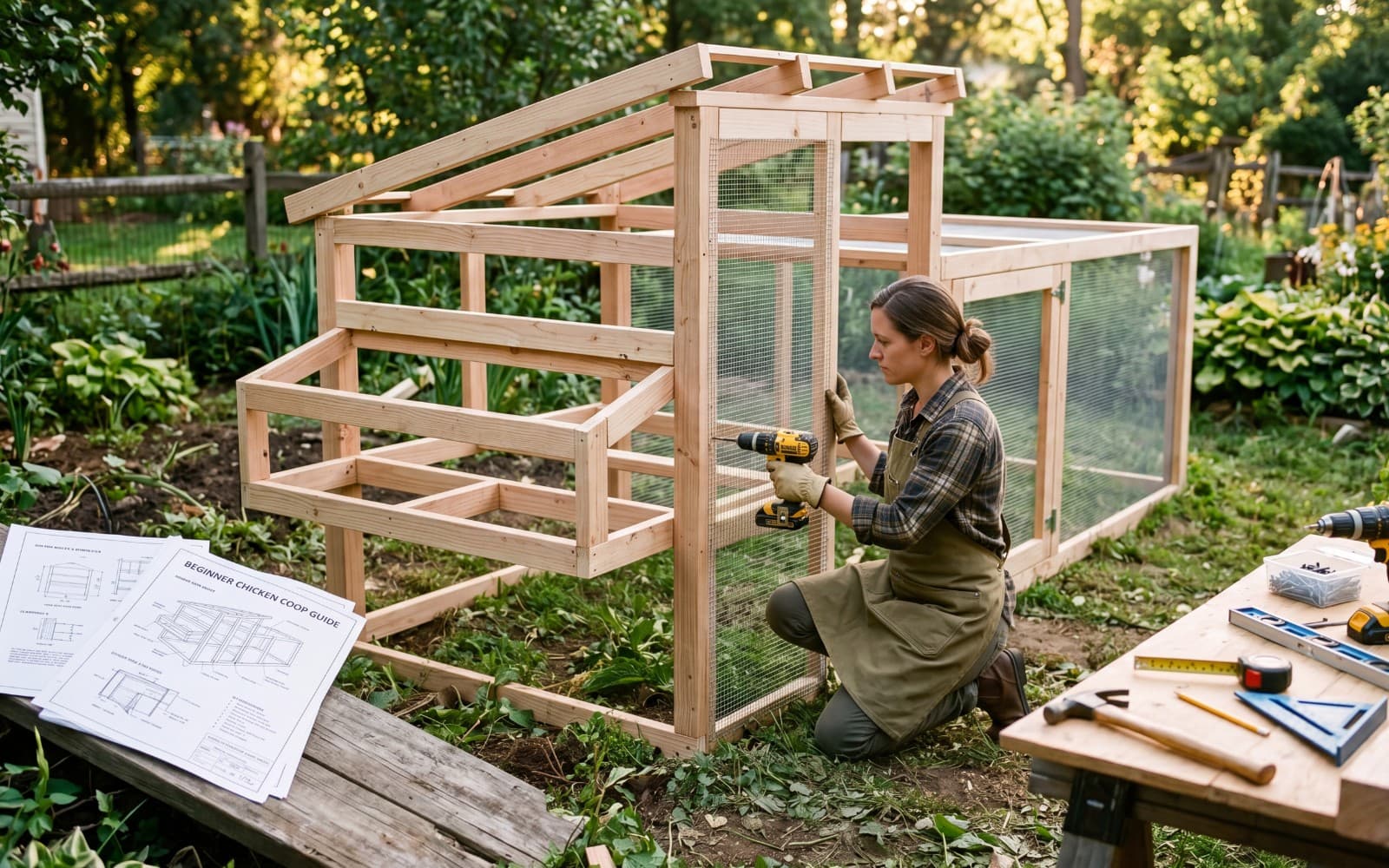
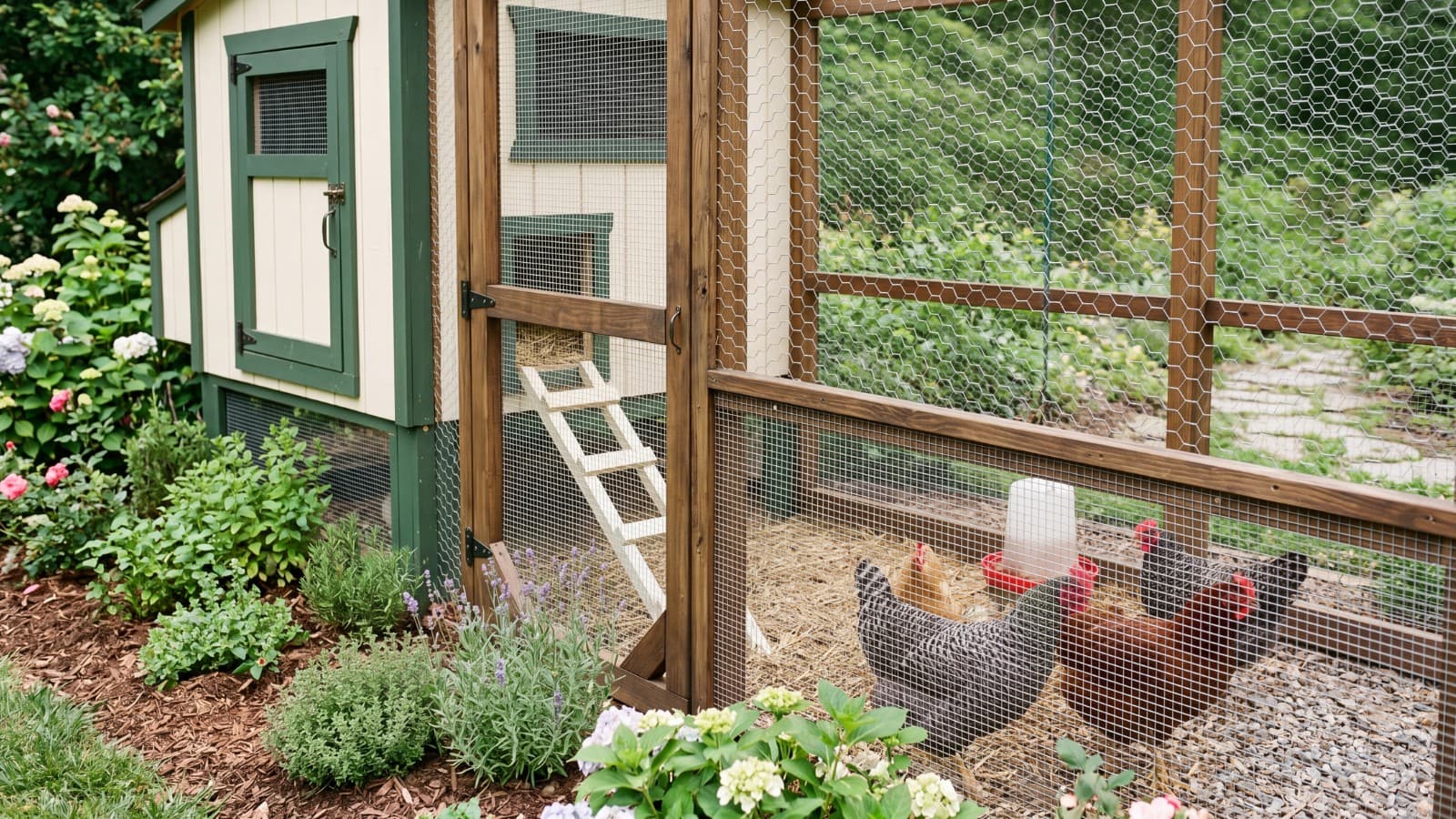
When building a secure backyard chicken coop and run, choosing the right wire mesh is the single most important decision you will make for your flock's safety. Many beginners mistakenly assume that 'chicken wire' is the best choice for protecting chickens. In reality, chicken wire is not designed for security and will fail to keep out most predators. This guide compares chicken wire and galvanized hardware cloth, details their wire gauges and sizes, lists predator risks, and explains exactly where to use each material.
The quick answer
The quick answer is that chicken wire is only useful for keeping chickens inside a specific area, while galvanized hardware cloth is required to keep predators out. Chicken wire is thin, flexible, and easily torn by dogs, foxes, and raccoons. Hardware cloth is stiff, durable, and highly secure. To keep your flock safe, you must use hardware cloth for all coop openings, windows, vents, and the lower sections of the outdoor run. Using the wrong wire is the most common cause of tragic flock losses.
While hardware cloth is more expensive per square foot, it is a permanent investment in your flock's safety. Replacing chicken wire after a predator attack is far more costly than building with secure hardware cloth initially. Never rely on chicken wire for nighttime coop security. Hardware cloth creates a solid metal barrier that resists teeth, claws, and prying fingers, providing peace of mind for the keeper.
What each is for
Understanding wire gauges and mesh sizes is essential for coop building. Standard chicken wire is typically made of 20-gauge steel wire with 1-inch or 2-inch hexagonal openings. This wire is thin and flexible, offering little resistance to strong animals. Galvanized hardware cloth is a welded mesh made of 19-gauge steel with square openings, typically measuring 1/2 inch or 1/4 inch. The smaller the gauge number, the thicker the wire, meaning 19-gauge is significantly stronger than 20-gauge wire.
The 1/2-inch square openings are the industry standard for chicken coops. They are small enough to prevent small weasels, rats, and snakes from squeezing through, while still allowing excellent airflow. 1/4-inch mesh is also available, but it is made of thinner 23-gauge wire, which is less structurally strong and can clog with dust and feathers, restricting vital ventilation.
In addition to predator defense, 19-gauge hardware cloth is stiff enough to hold its shape over large spans without sagging. This makes it much easier to install on run frames, providing a neat, professional appearance. Thin chicken wire, by contrast, sag and stretches easily, creating gaps that predators can exploit.
Backyard chickens face threats from a wide variety of predators, both large and small. Large predators like dogs, coyotes, and bobcats can easily tear through thin chicken wire using their sheer weight and claws. Raccoons are notorious for reaching their hands through chicken wire openings to grab and pull chickens apart. Tiny predators like weasels and mink can squeeze through 1-inch holes, while rats will chew through wood and thin wire to reach feed bins.
Hardware cloth prevents all of these entry methods. Raccoons cannot fit their paws through 1/2-inch openings, and weasels cannot pass through the rigid grid. Hot-dipped galvanized wire also resists rust, ensuring that predators cannot find weak, corroded spots to break through. It is the only wire that protects against both digging and climbing pests.
Where to use hardware cloth
Use 1/2-inch hardware cloth on every opening where a predator could try to enter the coop. This includes ventilation windows under the roof eaves, low access windows, and the entire perimeter of the outdoor run. You should also bury a 12-inch wide apron of hardware cloth flat on the ground around the outside of the coop to prevent digging predators like foxes and dogs from tunneling underneath the fence. Secure all edges with heavy screws and washers.
This buried wire apron stops predators before they can dig deep enough to bypass the coop wall. Additionally, if you have a raised coop, cover the underside of the floor framing with hardware cloth to prevent rodents from chewing their way up through the wood floor panels at night. All doors and hatches must have hardware cloth installed behind any decorative wood trim.
Where chicken wire is fine
Chicken wire is suitable for partition walls inside a secure coop or for covering the top of a run that already has hardware cloth around the bottom six feet. It is also excellent for constructing temporary grazing pens, protecting garden beds, or wrapping around the base of fruit trees to prevent chickens from digging up the roots. It is a cost-effective material for zoning rather than security. It is lightweight and easy to install.
Use it to divide your coop when introducing new pullets to the flock or isolating a broody hen. It allows the birds to see and smell each other without physical contact, reducing aggression. It is a utility fence wire rather than a secure barrier. It is also excellent for building light-weight chicken tractors that are moved daily onto fresh grass in secure yards.
What to actually buy
When selecting hardware cloth, choose hot-dipped galvanized after welding (GBW) wire to ensure long-lasting rust protection. The optimal gauge is 19-gauge steel wire with 1/2-inch square mesh openings. This is robust enough to resist chewing from dogs, coyotes, and raccoons, while preventing weasels, rats, and snakes from squeezing inside. For overhead vents or small gaps, 1/4-inch mesh is useful, though it is typically made of thinner 23-gauge wire. When installing it, always use wide-crown construction staples or wood screws with fender washers rather than plain staples, which can easily pop out under pressure. Purchasing rolls in bulk is much more cost-effective for large runs. Always wear thick leather work gloves when handling hardware cloth, as the cut wire edges are incredibly sharp and can cause deep cuts. Use tin snips or heavy-duty wire cutters to make straight cuts along the grid lines.
Frequently Asked Questions
Quick, practical answers to common questions about feeding this to chickens.
About the Author

Amy Schmelter is a lifelong chicken keeper raising a large flock in Florida and the author of the upcoming book What I Wish I Knew Before Getting Chickens. She started Chicken Homestead to share what actually works.
Disclosure
Some links on Chicken Homestead may be affiliate links. We only recommend products we’d use ourselves. See our affiliate disclosure for details.