The Silkie chicken is one of the most distinctive, ornamental, and beloved breeds of poultry in the world. Famous for their fluffy, fur-like plumage, dark black skin, and sweet personalities, Silkies look more like mythical creatures than standard farm birds. Originating in ancient Asia—likely China or India—and documented by Marco Polo in the 13th century, they have captured the hearts of keepers for centuries. This guide explores their unique anatomy, broodiness, space needs, and how to manage their specialized care requirements in a backyard flock.
Because of their small size and sweet disposition, Silkies make fantastic entry-level chickens for families with limited space. They adapt well to confinement and are quiet, meaning they won't disturb your neighbors. They are widely kept both as show birds and highly handleable garden companions.
Silkie at a glance
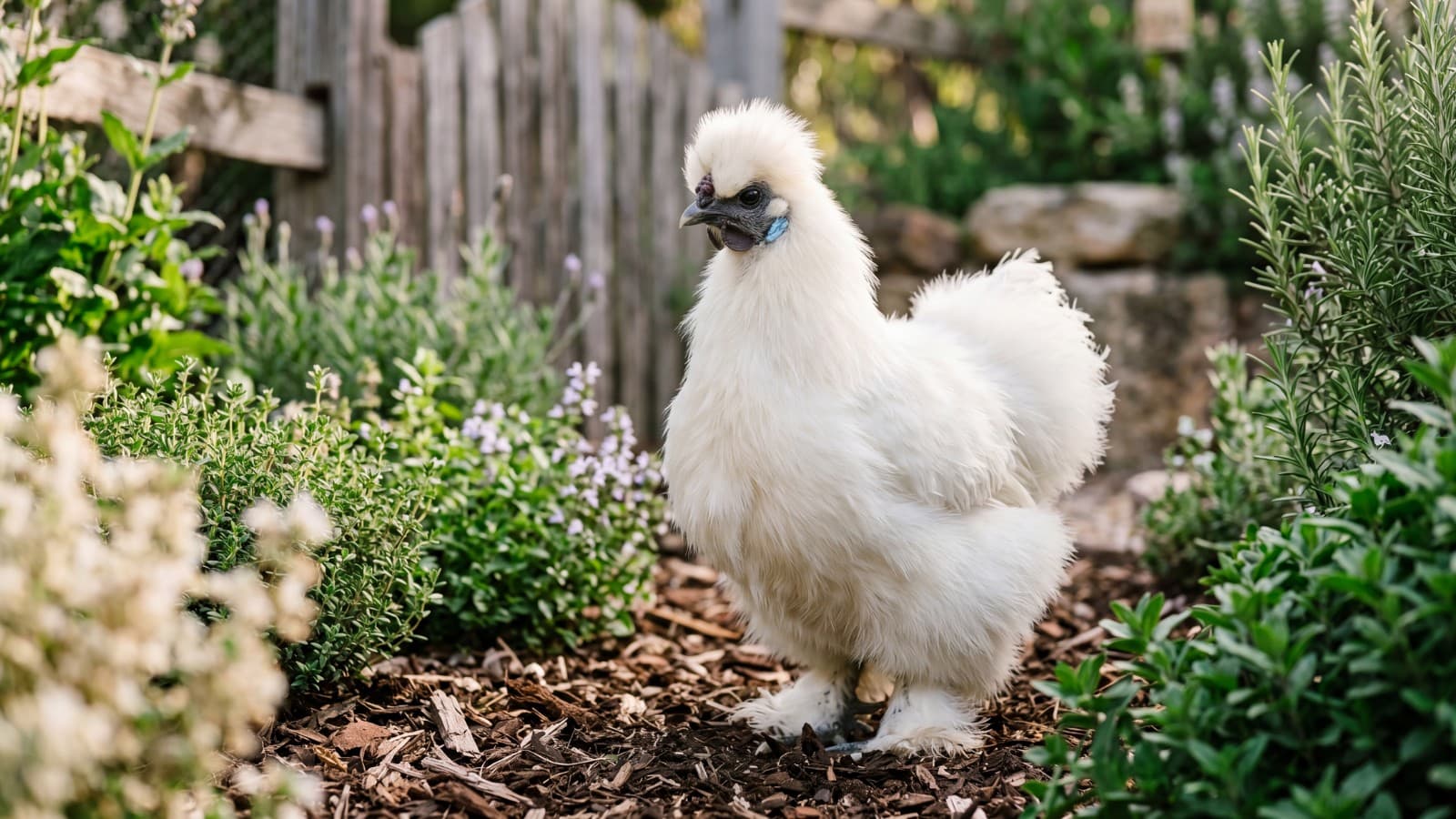
Silkies are small bantam chickens characterized by their cloud-like appearance, feather crests, and unique slate-blue or black skin, bones, and meat. Unlike standard chickens, they have five toes on each foot instead of four, and their earlobes are a striking turquoise color. They are quiet, calm, and incredibly docile, making them popular choices for urban yards and therapy birds. Their mothering instincts are legendary, as they will gladly sit on and hatch eggs of any species.
They are classified as a bantam breed in the United States, though in some European countries they are recognized in both standard and bantam sizes. Their physical quirks make them a fascinating genetic study and a gorgeous visual addition to any backyard flock.
Appearance and what makes Silkies different
The most striking feature of the Silkie is its fluffy plumage, which behaves like soft down. They possess a prominent crest of feathers on their heads, a fluffy beard, and feathered legs. Underneath their white, black, blue, buff, or paint feathers lies dark-pigmented skin (melanism). They also have a dark mulberry comb, turquoise earlobes, and five distinct toes. Because their feathers are so loose, they are unable to fly and are highly vulnerable to getting wet or cold in damp conditions.
Their feathers are so unique because they lack the rigid shaft and hook structure of standard feathers. This gives them a texture that feels exactly like soft hair or wool. They have feathering that runs all the way down their shanks and middle toes, which requires dry flooring.
Temperament
Silkies are widely regarded as one of the friendliest, gentlest, and most affectionate chicken breeds. They are quiet and calm, often enjoying being held, petted, and carried around by their keepers. Because they cannot fly, they are easily contained within low garden borders. Their trusting nature means they can sometimes be picked on by more aggressive breeds, so they do best when kept with other bantam or peaceful standard breeds.
They form close bonds with their owners and will often make quiet, chattering sounds when you interact with them. Their gentle, slow-moving nature makes them safe around toddlers and pets. They are highly trainable and will quickly learn to come when called for treats.
Egg laying and broodiness
Silkies produce a modest number of small, cream-colored eggs, averaging about 100 to 120 per year. However, they make up for their low output with their outstanding maternal instincts. A Silkie hen is almost always ready to go broody. They will sit stubbornly on nests for weeks, making them the perfect natural incubators for homesteaders who want to hatch chicks without using electric incubators. They are exceptionally attentive and protective mothers to their hatched brood.
Their broodiness is so strong that they will try to hatch anything from rocks to pinecones. If you want to use them to raise chicks, simply slip day-old chicks under a broody Silkie at night, and she will accept them as her own. They are the ultimate foster mothers of the coop.
Size and space needs
Silkies are considered bantams in most parts of the world, with roosters weighing about 36 ounces (2.25 pounds) and hens weighing around 32 ounces (2 pounds). Because of their small size, they require less space in the coop and run than standard breeds. However, their small stature also makes them easy targets for predators, including hawks, owls, and neighborhood cats. Their housing must be extra secure to keep them safe.
Their small bodies also mean they consume very little feed compared to standard laying hens. This feed efficiency makes them a highly economical choice for keepers who want the joy of keeping chickens without high weekly feed bills. Their coops can be built smaller and lower.
Climate fit
While Silkies are relatively hardy, their unique feathers do not provide the waterproof barrier that standard feathers do. If they get wet, they lose their ability to trap heat and can quickly suffer from hypothermia. They require a draft-free coop and a fully covered run to keep them dry. In winter, they need dry bedding, and in summer, their heavy fluff requires adequate shade and airflow to prevent heat stress.
Because they cannot fly, they cannot reach high perches to escape rising cold air or ground dampness. You must ensure their coop floor is heavily bedded and insulated. In summer, they are highly prone to overheating, so provide them with frozen treats and shaded dust baths.
Coop and care needs
- Low perches. Because Silkies cannot fly, their roosting bars must be placed low to the ground (12 inches or lower) or equipped with a ramp so they can climb up safely.
- Fully covered run. A wet Silkie is a cold Silkie. Protect them from rain and snow with a solid roof or tarp over their entire outdoor run area.
- Crest grooming. Their head crests can grow so large that they block their vision. Use a small hair tie or trim the feathers gently around their eyes to help them see.
- Extra predator proofing. Because they are small and cannot fly away from danger, ensure the run is wrapped in 1/2-inch hardware cloth to keep out small predators.
Common care issues
Silkies are prone to a few specific health concerns due to their unique traits. Their head crests can collect moisture and dirt, leading to eye infections, and can also hide external parasites like lice and mites. Check their crests and beards regularly. Because they have five toes, their extra claws can grow at odd angles and may require clipping to prevent snagging. They are also highly susceptible to Marek's disease, so buying vaccinated birds is recommended.
Additionally, their skulls have a genetic quirk known as a vaulted skull, where the top of the skull has a soft, fibrous opening. This makes them highly vulnerable to head injuries from pecking or rough handling. Keep them in a peaceful flock to avoid head trauma.
Pros and cons
Pros: Incredibly sweet, docile, and excellent with children; make outstanding broody mothers for hatching chicks; require very little space; unique and beautiful appearance.
Cons: Low egg production; feathers are not waterproof and need protection from rain; vulnerable to predators due to small size and lack of flight; prone to eye issues from large crests.
Who Silkies are best for
Silkies are perfect for families with young children, urban keepers with limited space, and homesteaders who want natural mothers to hatch eggs. Their gentle nature and pet-like qualities make them one of the most rewarding ornamental breeds to raise.
Frequently Asked Questions
Quick, practical answers to common questions about feeding this to chickens.
About the Author

Amy Schmelter is a lifelong chicken keeper raising a large flock in Florida and the author of the upcoming book What I Wish I Knew Before Getting Chickens. She started Chicken Homestead to share what actually works.
Disclosure
Some links on Chicken Homestead may be affiliate links. We only recommend products we’d use ourselves. See our affiliate disclosure for details.