Sapphire Gem chickens (sometimes called Sapphire Blues) are a modern hybrid breed that has taken the backyard poultry world by storm. Developed in the Czech Republic, they are a sex-linked cross, typically created by breeding a blue Andalusian and a barred Plymouth Rock. This unique parentage gives them outstanding hybrid vigor, resulting in robust health and exceptional egg-laying capability. They are highly sought after for their striking lavender-blue plumage and their friendly, docile personalities, which make them a joy to raise.
Unlike many production hybrids that tend to be high-strung or skittish, Sapphire Gems are remarkably calm and personable. They adapt beautifully to a variety of climates and coop setups, making them an ideal choice for both urban backyard runs and rural homesteads. This profile covers their physical characteristics, laying habits, climate tolerances, and specific care requirements to help you decide if they are the right fit for your flock.
Sapphire Gem at a glance
- Class: Hybrid (production sex-link)
- Hen weight: 5 to 6 pounds
- Rooster weight: 6 to 7 pounds
- Egg color: Brown
- Eggs per year: 280 to 300+
- Egg size: Large to extra-large
- Winter laying: Excellent
- Cold hardy: Very good
- Heat tolerance: Good
- Broodiness: Rare
- Lifespan: 5 to 7 years
Appearance and size
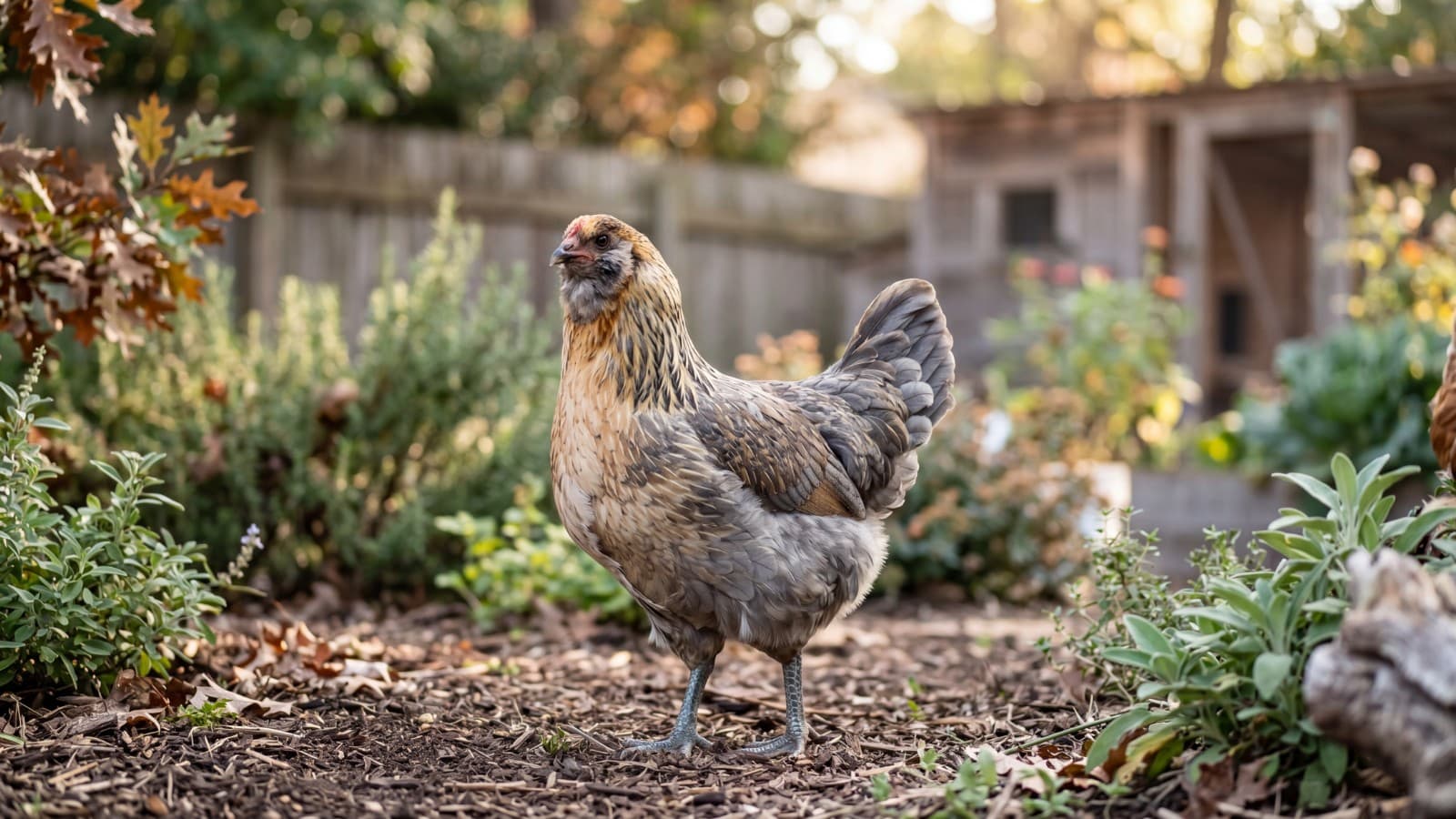
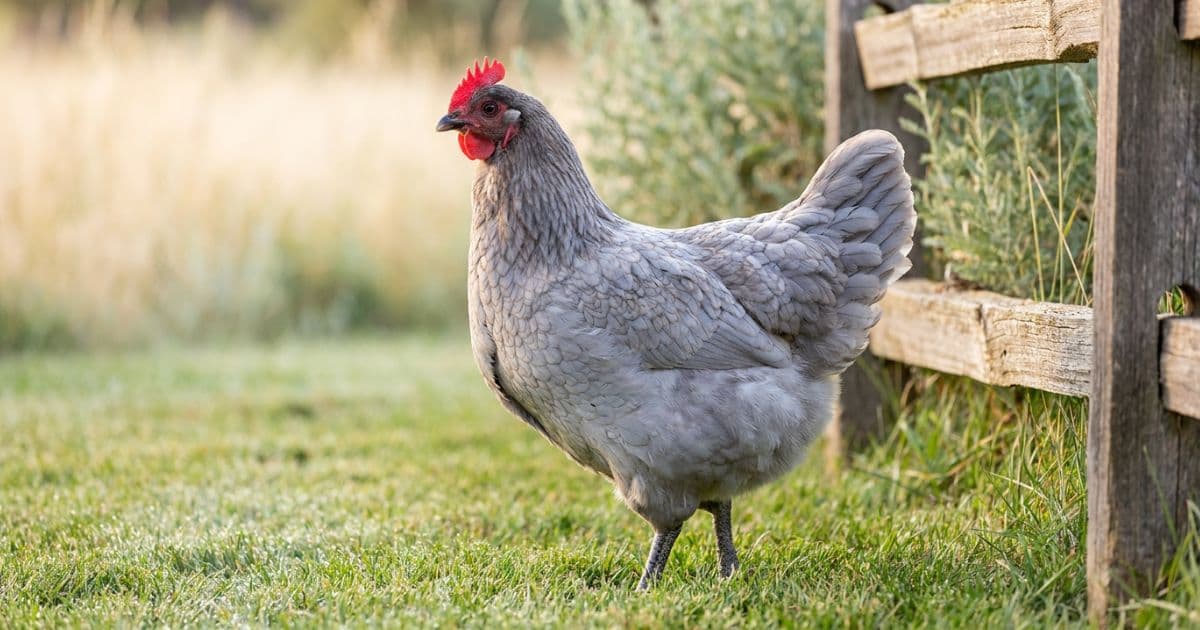
The appearance of Sapphire Gem chickens is both beautiful and functional. They have a medium-sized, upright build with clean legs and a single red comb. Their most defining feature is their soft, blue-grey plumage, which can vary from a light silvery-blue to a deep slate grey. As a sex-linked hybrid, they display sex-specific coloring from hatch. Adult hens have a solid blue-grey body with a darker, golden-bronze or copper necklace of feathers around their necks, while roosters are lighter and feature white barring or speckling throughout their plumage. This makes sexing the chicks at hatch 100% accurate, which is a major advantage for keepers who cannot have roosters.
Their feathers are dense and smooth, providing excellent insulation against both cold and heat. They have clean, unfeathered yellow or slate-grey shanks, which prevents the mud-caking issues common in feathered-leg breeds. Their medium-sized single comb and wattles are bright red, and while they are generally cold hardy, their large combs can be susceptible to frostbite in extreme sub-zero temperatures. In terms of size, hens weigh around 5 to 6 pounds, while roosters grow to about 6 to 7 pounds, making them slightly smaller and lighter than heritage Plymouth Rocks, but larger than bantams.
Temperament
Sapphire Gems possess an outstanding temperament that makes them a favorite among families. They are highly curious, active, and outgoing birds that love to explore their surroundings. When you enter the coop or run, they are usually the first to run to the door, hoping for treats or human interaction. They are exceptionally docile and easy to handle, often allowing their keepers to pick them up, carry them, or inspect them for health issues without struggle. This makes them a perfect match for families with young children who want interactive pets.
In a mixed flock, Sapphire Gems are confident but peaceful. They rarely start fights and typically settle into the middle of the pecking order. However, because they are active and alert, they are excellent foragers and remain vigilant against predators. They are also relatively quiet hens, making them suitable for suburban yards where noise limits are a concern. Their balanced combination of high productivity, active foraging, and sweet nature is hard to beat. If you want to compare their friendly behavior with other popular options, see our guide on friendliest chicken breeds.
Egg laying
If egg production is your primary goal, Sapphire Gems are an exceptional choice. They are bred specifically to be high-volume producers, laying between 280 and 300+ large to extra-large brown eggs per year, which translates to 5 to 6 eggs per week per hen. They begin laying earlier than most heritage breeds, often starting around 18 to 22 weeks of age. Unlike heritage breeds that take a long break during the winter, Sapphire Gems have a high laying drive and will often continue laying through the cold winter months, provided they receive adequate nutrition.
To support this intense level of egg production, you must feed them a premium quality layer feed containing 16% to 18% protein, and always offer free-choice oyster shell in a separate cup. The high demand for calcium to build eggshells can quickly deplete a hen's bodily reserves, leading to soft-shelled eggs or bone weakness if not supplemented. Because they are production-focused, they rarely go broody, meaning they will not waste weeks sitting on empty nests, ensuring a steady supply of fresh eggs. For a comprehensive look at how they stack up against other top layers, read our guide on best chicken breeds for eggs.
Climate hardiness
Sapphire Gems are highly adaptable and handle a wide range of climates with ease. Their dense plumage provides great insulation against winter cold, and they are generally considered very cold-hardy. However, because they have a single comb, keepers in northern climates must take standard precautions to prevent frostbite during extreme cold snaps. Keeping the coop dry and well-ventilated is the most critical step, as moisture in the air is the primary cause of frostbite on combs.
In hot weather, Sapphire Gems perform well compared to heavier, fluffier breeds. They will seek out shade, dust bathe to cool down, and drink plenty of fresh water. Make sure to provide multiple water sources in shaded areas during summer heatwaves, and consider adding electrolytes to their water to prevent heat stress. Their clean legs are also an asset in wet, muddy climates, as they do not trap moisture or dirt like feathered legs do, reducing the risk of leg mites or bacterial infections.
Coop and care needs
- Standard roost bars. Provide 8 to 10 inches of roost space per bird. Set roosts at a standard height of 2 to 3 feet, as they are capable flyers and can easily reach them.
- Standard nest boxes. Standard 12x12 inch nest boxes work perfectly. Provide one nest box for every 3 to 4 hens in the flock.
- Space requirements. Allocate at least 4 square feet of coop space and 10 square feet of run space per bird. Since they are active foragers, they appreciate as much extra run space as you can provide.
- High-calcium feed access. Ensure they have constant access to layer feed and free-choice oyster shell to support their high egg laying rate. See our chicken feed guides.
Pros and cons
Pros: Exceptional egg production (280-300+ per year), extremely friendly and docile temperament, fast to mature and start laying, highly adaptable to hot and cold climates, sex-linked at hatch (accurate sexing).
Cons: Shorter productive lifespan due to high laying intensity (often slowing down significantly after 3 years), prone to reproductive tract issues later in life, single combs require frostbite protection in extreme cold.
Who Sapphire Gems are best for
- Beginner keepers who want a highly productive, low-maintenance breed. See best chickens for beginners.
- Families with children who want friendly, interactive, and easily handled pets.
- Suburban yards where noise must be kept to a minimum and space is limited.
- Keepers who want a steady supply of eggs throughout the winter months.
Frequently Asked Questions
Quick, practical answers to common questions about feeding this to chickens.
About the Author

Amy Schmelter is a lifelong chicken keeper raising a large flock in Florida and the author of the upcoming book What I Wish I Knew Before Getting Chickens. She started Chicken Homestead to share what actually works.
Disclosure
Some links on Chicken Homestead may be affiliate links. We only recommend products we’d use ourselves. See our affiliate disclosure for details.