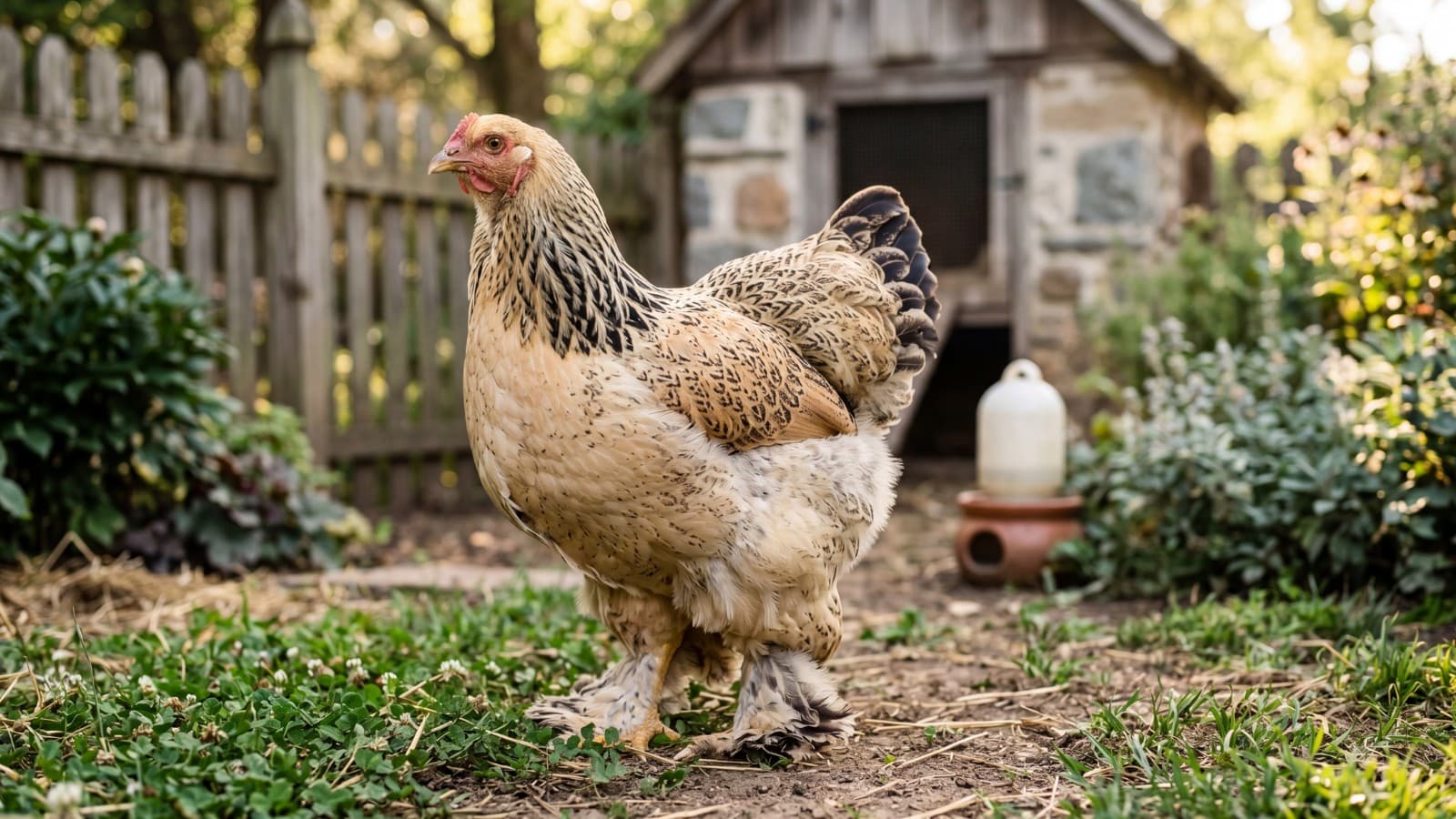
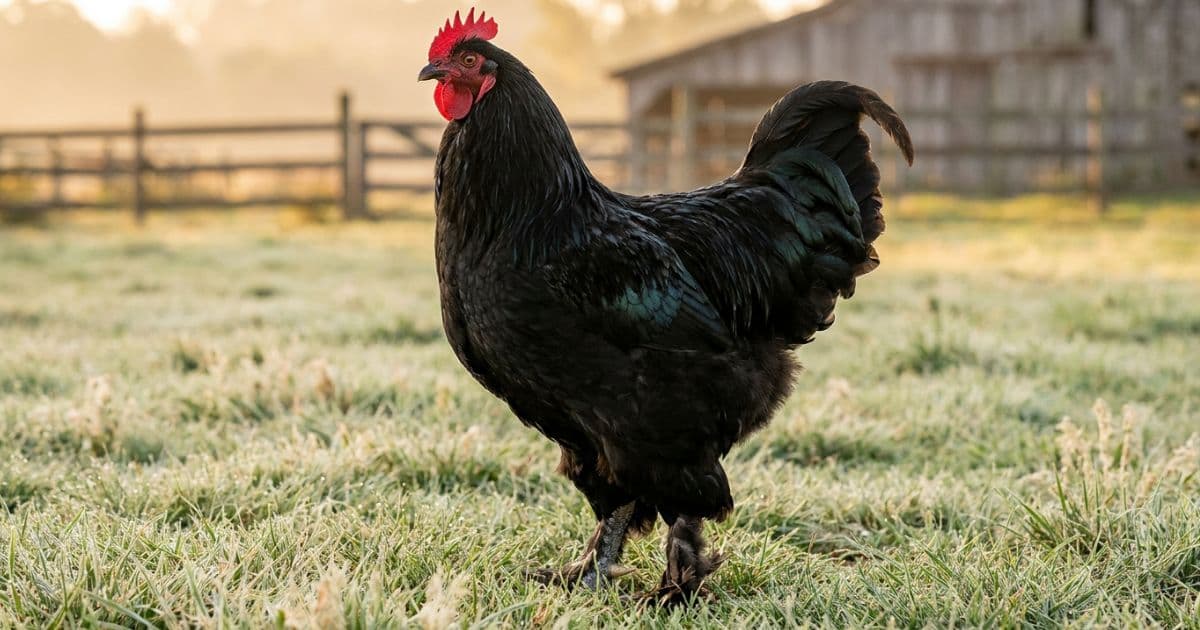
The Jersey Giant is a classic American heritage chicken breed that holds the title of the largest purebred chicken in the world. Developed in New Jersey in the late 19th century by John and Thomas Black, the breed was bred specifically to replace the turkey as a commercial meat bird. To achieve their massive size, breeders crossed several heavy breeds, including Black Javas, Dark Brahmas, and Black Langshans. Today, Jersey Giants are highly prized by backyard keepers and homesteaders who value a calm, quiet flock and want docile, family-friendly giants.
While they are incredibly impressive, Jersey Giants are not suited for small or cramped coop setups. Their massive size means they require extra floor space, wide doors, and low roost bars to prevent leg injuries. They are slow to mature, taking up to a year to reach full size and start laying, but they are highly robust and cold hardy. This profile covers their physical characteristics, egg laying, temperament, and care requirements to help you decide if you can accommodate these magnificent gentle giants.
Jersey Giant at a glance
- Class: American (APA heritage)
- Hen weight: 10 to 11 pounds
- Rooster weight: 13 to 15 pounds
- Egg color: Medium to dark brown
- Eggs per year: 150 to 200
- Egg size: Extra-large
- Winter laying: Very good
- Cold hardy: Excellent
- Heat tolerance: Poor
- Broodiness: Low to moderate
- Lifespan: 6 to 8 years
Appearance and size
The appearance of the Jersey Giant is defined by its massive size and heavy build. They have a long, deep, and broad body with a classic horizontal carriage. Their plumage is recognized in three standard varieties: black (which has a beautiful beetle-green sheen in the sun), white, and blue. They have clean, unfeathered black or willow-grey shanks and feet with distinctive yellow soles, which is a key trait used to distinguish them from Black Australorps (which have pinkish-white soles).
They have a single, medium-sized comb, bright red wattles and earlobes, and clean slate-grey shanks under their leg feathers. Their feathers are tight and smooth, providing excellent insulation against freezing winter temperatures. Standard hens weigh between 10 and 11 pounds, while roosters grow to a massive 13 to 15 pounds, making them significantly larger than standard dual-purpose breeds. Their heavy build helps them retain body heat in cold weather, though it means they require a sturdy roost bar close to the ground.
Temperament
Jersey Giant chickens have an exceptionally sweet and docile temperament. They are unusually calm, slow-moving, and placid birds that seem to enjoy human contact and handle easily. They are very easy to catch, hold, and carry, making them a top choice for families with young children or keepers looking for gentle lap pets. They are peaceful flock members and rarely engage in pecking order conflicts, often settling into the middle or bottom of the pecking order.
Because they are slow and heavy, they cannot fly and will not attempt to scale fences. This makes containing them simple, but it also leaves them vulnerable to ground predators, so a secure, enclosed run is necessary. They are quiet hens that spend their days slowly foraging or resting in shaded areas. Their low noise levels and sweet nature make them highly suitable for suburban setups. If you want to compare their friendly behavior with other popular breeds, see our guide on friendliest chicken breeds.
Egg laying
As layers, Jersey Giants are steady and reliable. They produce between 150 and 200 large to extra-large brown eggs per year, which translates to 3 to 4 eggs per week. They mature slowly, often starting to lay around 24 to 28 weeks of age. Unlike production hybrids, they do not lay well during the winter months, and their frequent broody spells will cause long pauses in their egg production.
They have a low to moderate tendency to go broody, meaning they will occasionally sit on a nest but are easily broken if necessary. If allowed to sit, they make attentive and gentle mothers, but their massive size means they can accidentally crush eggs or chicks in the nest. For keepers who prioritize egg production, Leghorns or hybrids are far better options. To see how their egg production compares with top laying breeds, read our guide on best chicken breeds for eggs.
Climate hardiness
Jersey Giants are highly cold hardy, thanks to their dense plumage. Their heavy body mass and tight feathers provide excellent insulation against winter cold. However, keepers must still ensure that the coop remains dry and draft-free to prevent respiratory issues. Their clean legs are also an asset in wet, muddy conditions, as they do not trap moisture or dirt.
In hot weather, Jersey Giants struggle due to their massive build and heavy feathering. They are highly susceptible to heat stress and heat stroke during summer heatwaves. Keepers must provide deep shade all day long, multiple water sources filled with cool, clean water, and a shaded dust bath area where they can cool their bodies. Providing frozen treats can also help them manage high temperatures.
Coop and care needs
- Lower roost bars. Because they are heavy, flightless birds, set roost bars low (around 18 to 24 inches) or provide a sturdy ramp. Heavy bedding on the floor is also acceptable. See what should be inside a chicken coop.
- Extra-large nest boxes. Provide wide, low-profile nest boxes. Standard nest boxes are too small. Provide boxes measuring at least 14x14 inches to allow them to turn around comfortably.
- Space requirements. Allocate at least 5 to 6 square feet of coop space and 12 to 15 square feet of run space per bird. They are large birds and need room to move comfortably. Read our chicken coops guides.
- Wider doors. Ensure the coop pop door and human access doors are wide enough to accommodate their broad bodies without friction.
Pros and cons
Pros: Exceptionally sweet and friendly temperament, beautiful massive appearance, very cold-hardy, excellent dual-purpose meat and egg breed.
Cons: Requires extra coop and run space, slow growth and late to start laying (24-28 weeks), highly susceptible to heat stress in summer, can accidentally break eggs due to size.
Who Jersey Giants are best for
- Families with kids looking for a calm, friendly, and docile pet chicken.
- Homesteaders wanting a large dual-purpose meat and egg breed.
- Cold climates where a hardy, winter-resistant layer is required.
- Spacious yards or free-range environments where active foragers are valued. See best chickens for beginners.
Frequently Asked Questions
Quick, practical answers to common questions about feeding this to chickens.
About the Author

Amy Schmelter is a lifelong chicken keeper raising a large flock in Florida and the author of the upcoming book What I Wish I Knew Before Getting Chickens. She started Chicken Homestead to share what actually works.
Disclosure
Some links on Chicken Homestead may be affiliate links. We only recommend products we’d use ourselves. See our affiliate disclosure for details.