The Barnevelder is a classic Dutch heritage chicken breed that combines outstanding beauty with reliable utility. Developed in the town of Barneveld, Netherlands, in the early 20th century, the breed was bred as a dual-purpose bird to supply the dark-brown egg market. Today, they are a favorite among backyard keepers, celebrated for their unique and intricate 'double-laced' plumage and their exceptionally calm, sweet, and quiet personalities. They are widely regarded as one of the best heritage breeds for family coops.
Barnevelders are highly robust, long-lived, and adaptable, easily handling the damp, cold conditions that cause other breeds to struggle. They have clean yellow legs, a single red comb, and an easygoing nature. This profile covers their physical characteristics, egg laying, temperament, and care requirements to help you decide if they are the right fit for your flock.
Barnevelder at a glance
- Class: Continental (APA heritage)
- Hen weight: 6 to 7 pounds
- Rooster weight: 7.5 to 8.5 pounds
- Egg color: Dark brown
- Eggs per year: 180 to 200
- Egg size: Medium
- Winter laying: Very good
- Cold hardy: Excellent
- Heat tolerance: Good
- Broodiness: Low to moderate
- Lifespan: 8 to 10 years
Appearance and size
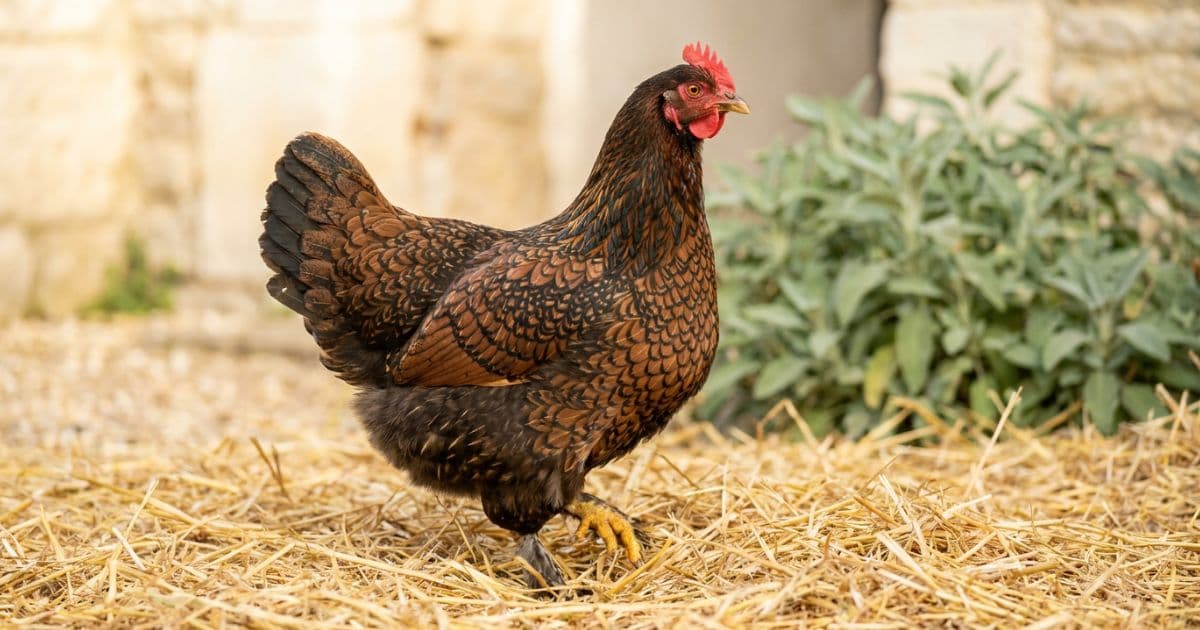
The appearance of the Barnevelder is truly striking, especially the hens. They have a medium-heavy, balanced dual-purpose shape with clean yellow shanks and yellow skin. The most famous and recognized plumage variety is the double-laced pattern. Each mahogany-red feather is bordered by a black outer lace and a second black inner lace, creating a beautiful concentric pattern that shimmers with green and violet iridescence in the sunlight. They are also recognized in solid black, white, and blue varieties.
They have a single, medium-sized comb, bright red wattles and earlobes, and clean yellow legs. Their feathers are tight and smooth, providing excellent protection against winter wind and dampness. Standard Barnevelder hens weigh between 6 and 7 pounds, while roosters grow to 7.5 to 8.5 pounds. This solid build helps them retain body heat in cold weather, though they are light enough to remain active foragers.
Temperament
Barnevelder chickens have a highly docile and gentle temperament. They are active and alert foragers that love to scratch for bugs in the garden, but they are also exceptionally calm and quiet. They are very easy to catch, hold, and carry, making them excellent pets for children and beginners. They show a genuine interest in humans and will happily follow you around the yard, waiting for treats or quiet chatter.
In a mixed flock, they are peaceful and sit comfortably in the middle of the pecking order. They are rarely aggressive and will get along well with other docile breeds like Orpingtons or Sussex. However, they should not be housed with highly aggressive hens, as their gentle nature makes them vulnerable to bullying. Their quiet behavior makes them highly suitable for suburban neighborhoods. To see how their temperament compares to other friendly choices, see our guide on friendliest chicken breeds.
Egg laying
As layers, Barnevelders are steady and reliable. They produce between 180 and 200 medium-sized dark brown eggs per year, which translates to 3 to 4 eggs per week. While their eggs are not as dark as the chocolate-colored eggs of the Marans, they are a rich, warm brown color that adds variety to your egg basket. They are excellent winter layers, often continuing to lay through the cold winter months when other breeds stop.
They generally start laying around 20 to 24 weeks of age. Barnevelders have a low to moderate tendency to go broody, meaning they will occasionally sit on a nest but are easily broken if necessary. If allowed to sit, they make attentive and gentle mothers. To learn more about how their egg output compares with other laying breeds, read our guide on best chicken breeds for eggs.
Climate hardiness
The Barnevelder is exceptionally cold-hardy. Bred to withstand the damp, cold climate of the Netherlands, their dense feathering and heavy body mass provide outstanding insulation. Their clean, unfeathered legs are easy to maintain in wet weather, as they do not collect mud or ice. In cold climates, the main concern is frostbite on their single combs, which can be prevented by keeping coop humidity low.
In hot weather, they handle the heat well, provided they have access to shade and clean, cool water. Because they have dark feathers, they can absorb heat quickly in direct sunlight, so shaded areas are crucial. Providing fresh water is essential during summer heatwaves to help them regulate their body temperature and prevent heat stroke.
Coop and care needs
- Standard roost bars. Provide 8 to 10 inches of roost space per bird. Set roosts at a standard height of 2 to 3 feet, as they can fly well enough to reach them easily. See what should be inside a chicken coop.
- Standard nest boxes. Standard 12x12 inch nest boxes work perfectly. Provide one nest box for every 3 to 4 hens in the flock.
- Space requirements. Allocate at least 4 square feet inside the coop and 10 to 12 square feet of run space per bird. They are active foragers and appreciate space. Read our chicken coops guides.
- Clean water. Keep fresh, cool water accessible at all times to prevent heat stress and support egg production.
Pros and cons
Pros: Beautiful and unique double-laced plumage, exceptionally calm and friendly temperament, highly cold-hardy and robust, reliable egg production and winter laying.
Cons: Moderate egg production compared to production sex-links, slow to mature (20-24 weeks), single comb requires frostbite protection in extreme winter.
Who Barnevelders are best for
- Families with young children looking for a calm, friendly, and docile pet chicken.
- Beginner keepers wanting a hardy, low-stress heritage breed. See best chickens for beginners.
- Cold, damp climates where winter-hardy layers are required.
- Keepers looking for a steady supply of dark brown eggs throughout the year.
Frequently Asked Questions
Quick, practical answers to common questions about feeding this to chickens.
About the Author

Amy Schmelter is a lifelong chicken keeper raising a large flock in Florida and the author of the upcoming book What I Wish I Knew Before Getting Chickens. She started Chicken Homestead to share what actually works.
Disclosure
Some links on Chicken Homestead may be affiliate links. We only recommend products we’d use ourselves. See our affiliate disclosure for details.