Bananas are a soft, nutrient-dense fruit that backyard chickens absolutely love. They are easy to digest, high in potassium, and make an excellent quick energy source. However, because bananas are rich in sugars and can create a sticky mess, keepers must manage portion sizes and maintain coop cleanliness. Letting chickens eat too many sweet foods can disrupt their crop pH and cause severe digestive issues. This guide outlines the nutritional benefits of bananas, explains peel safety, and discusses serving sizes and frozen treats for hot summer days.
The short answer
Yes, chickens can eat bananas safely, including the soft inner flesh and the non-toxic peel. They are a healthy, soft treat that is easy for birds of all ages to consume. Serve bananas raw and plain in moderation, and avoid processed banana chips. Because they are soft, they are especially good for older hens or birds recovering from injuries who need easy-to-eat foods. Limit the feeding frequency to avoid sugar overload and maintain digestive health.
What bananas offer
Bananas are a rich source of potassium, Vitamin B6, Vitamin C, magnesium, and fiber. Potassium is essential for muscle function and fluid balance, while Vitamin B6 supports metabolic health and feather development. The soft fiber in bananas is gentle on the chicken's digestive system, and the natural sugars provide a quick boost of energy. However, because bananas lack the protein and calcium required by laying hens, they must remain a minor treat. They should never replace high-quality commercial layer feed.
In addition to core vitamins, bananas contain bioactive compounds such as carotenoids and phenolics, which have been shown to have antimicrobial properties. These help support a healthy immune system in your flock, ensuring they are robust against environmental pathogens. The energy density of bananas is especially useful during winter when chickens require extra calories to maintain their core body temperature.
The peel question
Banana peels are completely non-toxic and safe for chickens to eat. However, because the peel is thick, tough, and leathery, most chickens will struggle to peck through it. If you want to feed banana peels, chop them into tiny, easily swallowed pieces, or boil them to soften the texture. Make sure to wash the peel thoroughly to remove any pesticide residues, as bananas are heavily sprayed during cultivation. Organic banana peels are the safest option for your birds to avoid chemical exposure.
If you choose to compost banana peels instead of feeding them, make sure your compost bin is securely closed. Free-ranging chickens will naturally scratch through compost heaps, and they may ingest large, fibrous pieces of peel that have not yet broken down, posing a risk of crop impaction. Chopping the peel before composting accelerates decomposition and protects your flock.
Serving size
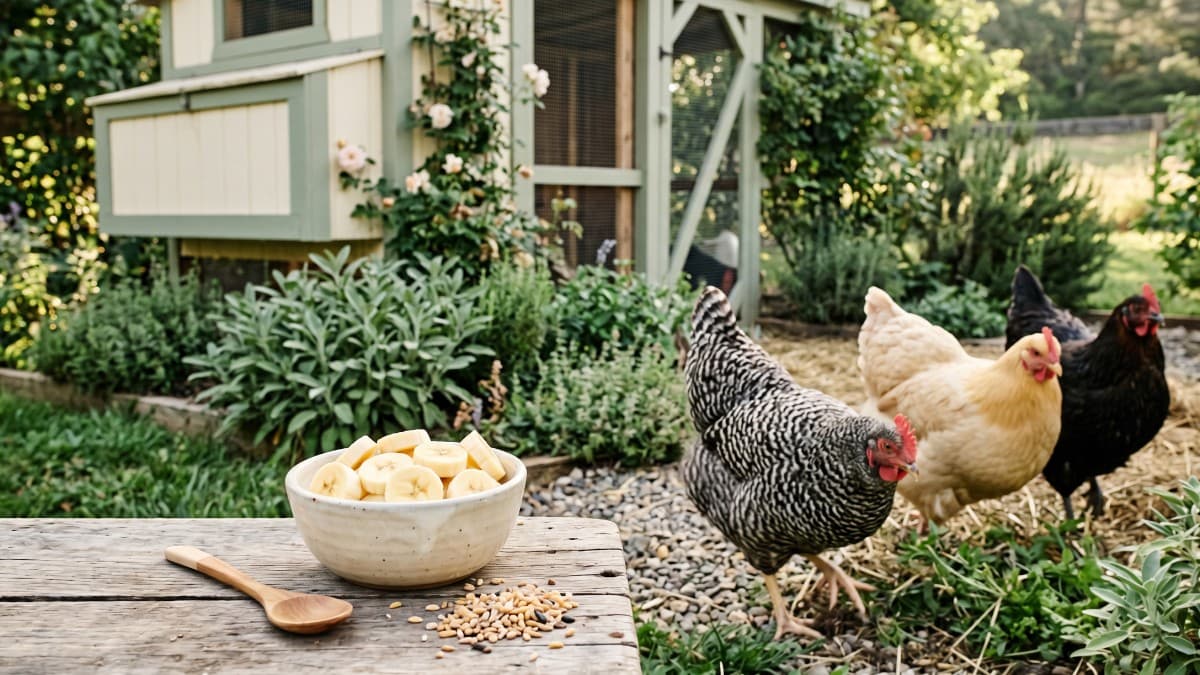
A safe serving size is about one 1/2-inch slice of ripe banana per adult hen, served once or twice a week. Because bananas are soft, chickens will eat them very quickly. You should slice the banana and place the pieces in a clean feeding dish rather than tossing a whole unpeeled banana into the run, which can lead to fighting and resource guarding among the hens. Splitting treats evenly keeps flock dynamics peaceful and prevents pecking injuries.
Always feed bananas during daylight hours, preferably in the afternoon when the chickens have already consumed the majority of their complete layer feed. This ensures that their core nutritional needs are met first, and the banana serves as a true supplement rather than a replacement for balanced grains.
How to prepare and serve
The simplest way to prepare bananas is to peel them and slice the flesh into thin wheels. You can place the slices in a heavy dish to keep them clean. Bananas mash easily, which is helpful if you want to mix them with warm oatmeal or scratch grains as a special winter treat. Never feed banana chips that have been fried in oil or sweetened with honey and sugar, as these are unhealthy for birds and can lead to fatty liver disease and obesity.
Frozen banana treats
During hot summer weather, frozen bananas make an outstanding cooling treat. You can slice bananas and freeze the pieces on a tray, then toss the frozen wheels into the run. The cold texture helps lower the chickens' core body temperature, keeping them comfortable and preventing heat stroke. It is a simple and effective way to help your flock manage extreme summer heatwaves, providing both hydration and cooling comfort during dry, hot afternoons.
Sticky mess and pests
Because bananas are soft and sticky, they can create a mess in the coop and run. Leftover banana pieces will attract flies, ants, wasps, and rodents to the coop, and they will spoil quickly in the sun. If your chickens do not finish the banana within an hour, clean up the residues. Also, check your chickens' beak and head feathers; sticky banana residue can attract dirt or encourage other birds to peck at them, causing feather loss and irritation.
When to avoid bananas
Never feed moldy, rotting, or fermented bananas to your flock. Spoiled bananas can develop harmful molds that contain toxic mycotoxins, which can be fatal to poultry. Fermenting fruit contains alcohol, which is highly toxic to birds and can cause neurological damage or sudden death. If the banana peel has turned completely black and the flesh is slimy, sour, or moldy, compost it instead. Ensure your compost bin has a tight lid to keep foraging chickens safe.
Where treats fit
Bananas should make up only a small fraction of the 10 percent treat allowance. The remaining 90 percent of their daily intake must consist of complete commercial layer feed to maintain the correct protein and calcium ratios. For details on feed schedules, view our chicken feed guide by age.
Ensuring your flock receives balanced nutrition supports consistent laying and overall flock health. For other treat safety guides, see can chickens eat apples and can chickens eat grapes. Maintain complete feed as the priority.
Frequently Asked Questions
Quick, practical answers to common questions about feeding this to chickens.
About the Author

Amy Schmelter is a lifelong chicken keeper raising a large flock in Florida and the author of the upcoming book What I Wish I Knew Before Getting Chickens. She started Chicken Homestead to share what actually works.
Disclosure
Some links on Chicken Homestead may be affiliate links. We only recommend products we’d use ourselves. See our affiliate disclosure for details.