Pineapple is a sweet, tropical fruit that can be a refreshing and highly hydrating treat for backyard chickens. It is packed with vitamins, minerals, and unique enzymes that can support flock health. However, because pineapple is highly acidic and contains high levels of natural sugars, it must be prepared and fed with caution to prevent digestive issues. Giving large quantities of acidic fruit can damage a chicken's crop and cause painful digestive upset. This guide covers the nutritional benefits of pineapple, contrasts fresh and canned varieties, outlines acidity limits, and explains how to safely prepare this tropical fruit for your birds. Because of its strong aroma and acidic profile, pineapple should always be fed on a clean surface or in a dish, rather than being thrown directly onto the dirt or bedding where it can quickly collect debris and turn sour.
The short answer
Yes, chickens can eat ripe pineapple flesh and cored sections, but only in moderation. You must remove the tough outer skin and spiny leaves, which represent choking and crop impaction hazards. Because of its high acidity and sugar content, pineapple should be offered as a rare treat rather than a daily feed. It should be chopped into small, bite-sized pieces that are easy for chickens to peck and swallow. Limit pineapple to a weekly treat to avoid overloading their digestive system with acid. Providing too much can irritate their mouth and esophagus, so caution is needed.
What pineapple offers
Pineapple is rich in Vitamin C, Vitamin B6, manganese, and beneficial antioxidants. Vitamin C supports the immune system and helps chickens manage heat stress, while manganese plays a key role in eggshell formation and bone health. Pineapple also contains bromelain, a unique enzyme with anti-inflammatory properties that can support digestive health and aid in protein breakdown. The high water content (about 86 percent) makes pineapple a highly hydrating snack during hot summer weather, helping keep your hens active and cool when temperatures soar, reducing the physiological strain of hot weather.
Fresh vs canned
Fresh, raw pineapple is always the best option for chickens, as it contains all of its natural vitamins and enzymes without any added chemicals. Canned pineapple, on the other hand, is usually packed in heavy sugar syrup or juice, which contains far too much sugar for a chicken's digestive system. If you must use canned pineapple, choose varieties packed in 100% juice with no added sugar, and rinse the fruit thoroughly under cold water before serving it to wash away excess sugars. Excess sugar can cause fermentation in the crop, leading to sour crop and potential fungal issues.
Acidity and sugar
Pineapple contains significant amounts of citric acid and natural sugars. Large quantities of acid can irritate the lining of a chicken's crop and gizzard, leading to digestive upset, inflammation, and loose droppings. High sugar levels can also cause yeast to overgrow in the crop, leading to sour crop, which is difficult to treat and painful for the bird. Therefore, it is critical to limit pineapple portions and serve it only alongside their regular dry layer feed, which helps neutralize the acidity and keeps their digestive tract balanced. Avoid feeding pineapple to birds already suffering from digestive problems.
Serving size
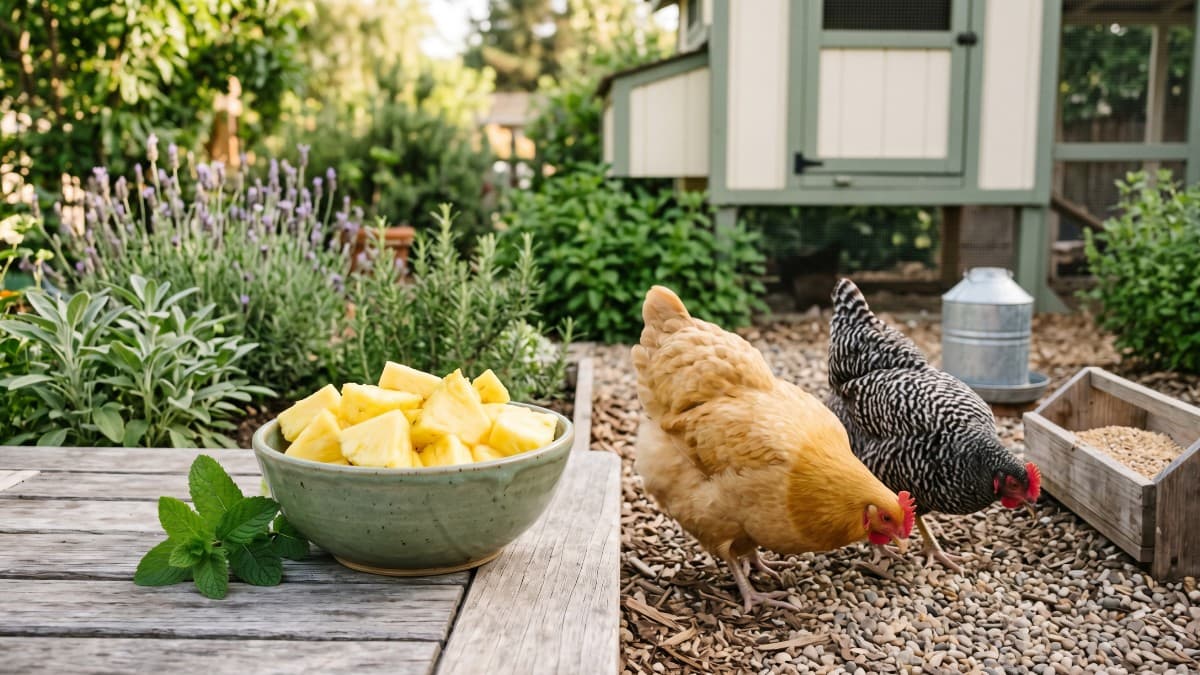
A safe portion size is about one small chunk (about the size of a postage stamp) of ripe pineapple flesh per adult hen, once a week at most. Because pineapple is a potent, strongly flavored fruit, some chickens may be suspicious of it at first. If your birds show no interest in the fruit after a few hours, clean up the leftovers to avoid attracting pests like wasps or letting the sugars ferment in the sun. Clean water should always be available to help rinse their mouths after eating acidic treats, ensuring their crop health remains optimal.
How to prepare and serve
To serve pineapple safely, peel the fruit thoroughly to remove the tough skin and spiny eyes. Chop the soft yellow flesh into tiny, bite-sized cubes that are easy for the birds to swallow without chewing. You can place the chopped pieces in a clean feeding dish or mix them with other safe, low-acid vegetables. During hot summer weather, you can freeze chopped pineapple chunks in water to create a cooling, hydrating ice block for the run, which chickens will enjoy pecking at as it melts, helping them regulate their temperature.
Core, leaves, and skin
You must avoid feeding pineapple leaves and skin, as they are too tough for chickens to digest and can cause severe blockages. The core is safe, but because it is woody and fibrous, it represents a choking hazard if left whole. Shred the core or slice it extremely thin before offering it. This allows the birds to enjoy the core safely and prevents any physical blockages in their digestive tract. Hanging the core as a toy in the run can also keep them occupied and reduce feather-pecking, providing great mental stimulation.
When to avoid pineapple
Never feed moldy, rotting, or fermented pineapple to your flock. Spoiled pineapple can develop harmful molds that contain toxic mycotoxins, which can be fatal to poultry. Fermenting fruit contains alcohol, which is highly toxic to birds and can cause neurological damage or sudden death. If the fruit has a sour, alcoholic smell or shows signs of rot, discard it immediately in the compost rather than feeding it. Keep your compost bin secure so your birds cannot forage on spoiled scraps, ensuring their environment remains clean.
Where treats fit in a balanced diet
Pineapple should make up only a small fraction of the 10 percent treat allowance. The remaining 90 percent of their daily intake must consist of complete commercial layer feed to maintain the correct protein and calcium ratios. For details on feed schedules, view our chicken feed guide by age.
Maintaining this balance prevents nutritional deficiencies and supports steady egg production. For other treat safety guides, see can chickens eat bananas and can chickens eat grapes.
Frequently Asked Questions
Quick, practical answers to common questions about feeding this to chickens.
About the Author

Amy Schmelter is a lifelong chicken keeper raising a large flock in Florida and the author of the upcoming book What I Wish I Knew Before Getting Chickens. She started Chicken Homestead to share what actually works.
Disclosure
Some links on Chicken Homestead may be affiliate links. We only recommend products we’d use ourselves. See our affiliate disclosure for details.