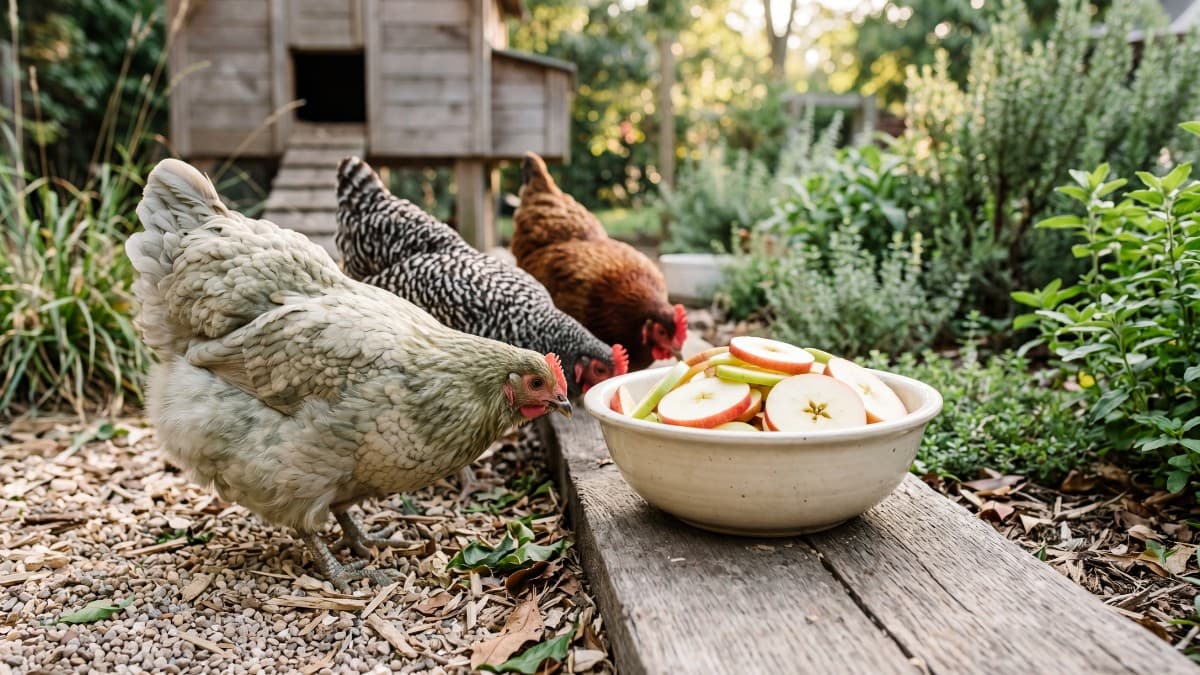
Apples are one of the most common and accessible kitchen scraps that backyard chicken keepers like to share with their flocks. They are crisp, sweet, and packed with beneficial vitamins and minerals that can support your birds' overall health. However, because apples contain seeds that pose a chemical threat, keepers must take specific precautions when preparing this fruit. This guide covers the nutritional benefits of apples, how to prepare them safely, and how to manage the risks associated with apple seeds.
The short answer
Yes, chickens can eat apples, but only if they are prepared correctly and served plain. The sweet white flesh and the nutrient-rich skin are completely safe and make a highly appealing treat for poultry. However, you must remove the core and all seeds before feeding apples to your birds. Raw apple seeds contain a cyanide-producing compound that is highly toxic to chickens and can lead to sudden death if consumed in large quantities.
What apples offer
Apples offer several health benefits to backyard chickens when fed as an occasional treat. They are an excellent source of Vitamin C, which helps support a healthy immune system and assists birds in managing heat stress during hot summer weather. They also contain Vitamin A, potassium, and dietary fiber. The soluble fiber, known as pectin, helps regulate digestion and supports a healthy gut microbiome in the chicken's digestive tract.
Additionally, apples contain antioxidants like quercetin, which help protect cells from oxidative damage and support overall flock vigor. Because apples are about 85 percent water, they are also a great hydrating snack that can keep your hens active and refreshed. However, because they contain natural sugars, they must be managed carefully to avoid disrupting their main diet.
Seeds, cores, and the cyanide question
The main concern when feeding apples to chickens is the core and the seeds. Apple seeds contain amygdalin, a cyanogenic glycoside that releases hydrogen cyanide when chewed and digested. Because chickens have a fast metabolism and a small body mass, they are highly susceptible to cyanide poisoning. Symptoms of cyanide toxicity include gasping for air, lethargy, convulsions, and rapid death.
While a chicken swallowing one or two stray seeds is unlikely to cause immediate harm, feeding them whole apple cores or allowing them to forage on fallen apples under orchard trees represents a major risk. Over time, cyanide can accumulate in their system or cause acute poisoning. To eliminate this danger, always slice apples, remove the entire core, and discard all seeds before throwing the fruit into the run.
Peel or no peel
You do not need to peel apples before serving them to your flock, as the skin contains a high concentration of the fruit's fiber and vitamins. Chickens enjoy pecking at the skin and will easily tear it apart. However, commercial apples are frequently sprayed with synthetic pesticides and coated in food-grade wax to prevent moisture loss and improve shelf life. These chemicals can be harmful to your birds.
To make apple peels safe, wash the fruit thoroughly under cold running water, scrubbing the skin gently to remove as much wax and chemical residue as possible. If you are feeding apples from your own unsprayed backyard trees, a simple rinse to remove dirt and insects is sufficient. Whenever possible, choose organic apples for your birds to avoid chemical exposure.
Serving size
Limit apples to a small portion size to prevent digestive issues. A good guideline is about one or two tablespoons of diced apple or a few thin slices per adult hen, served two to three times a week. Because apples contain fructose, feeding them too frequently can cause loose, watery droppings and make coop cleaning more difficult.
Overfeeding sweet treats can also lead to obesity, which is a serious health issue for laying hens. Obese hens are prone to fatty liver hemorrhagic syndrome, egg binding, and reduced egg laying. Keeping portions small ensures they enjoy the nutritional benefits of the fruit without risking their long-term health.
How to prepare and serve
The best way to serve fresh apples to your chickens is to core the fruit, remove all seeds, and dice the flesh into small, manageable cubes. This makes it easy for birds of all sizes to swallow and prevents choking. You can scatter the diced apple pieces directly on top of their clean run ground or place them in a shallow feeding dish.
Alternatively, you can grate a raw, de-seeded apple using a box grater to create fine, soft ribbons that are easy for pullets or older hens to eat. Never feed whole apples to your chickens; because they lack teeth, they will struggle to break down the tough skin, and a large chunk can get stuck in their throat or crop, causing a dangerous blockage.
Apple sauce, dried apples, and peelings
Plain, unsweetened apple sauce is safe for chickens in tiny amounts, but you must avoid sweetened commercial brands that contain added sugar and preservatives. You can make a batch of unsweetened sauce at home by boiling cored, peeled apples in water and mashing them plain. Dried apples are also safe, but they have a much higher sugar-to-water ratio than fresh ones and should be fed very sparingly.
Apple peelings from your kitchen are a great zero-waste treat, provided the apples were washed first. Avoid feeding apple cider or apple juice, as these liquids are highly concentrated in sugar and lack the fiber of the whole fruit. Also, skip apple pies, cobblers, or apples cooked with butter, sugar, cinnamon, or nutmeg, as these ingredients can disrupt their digestion.
When to avoid apples
Never feed moldy, rotting, or fermented apples to your chickens. Moldy fruit can contain mycotoxins, which are toxic compounds that cause severe respiratory issues, internal bleeding, or sudden death in poultry. Fermenting apples can also contain alcohol, which is highly toxic to birds and can damage their nervous systems and livers.
If you have apple trees in your yard, pick up any fallen fruit immediately to prevent the chickens from eating spoiled, wasp-infested, or moldy apples. If an apple is no longer fit for human consumption due to spoilage, it should be composted rather than fed to your flock.
Where treats fit
Apples should make up only a small fraction of the 10 percent treat allowance. The remaining 90 percent of their daily diet must consist of complete commercial layer feed, which is formulated with the correct protein, calcium, and vitamin ratios. For a detailed breakdown of age-appropriate diets, read our chicken feed guide by age.
Maintaining this balance prevents nutritional deficiencies and supports steady egg production. For other treat safety guides, see can chickens eat grapes and can chickens eat tomatoes.
Frequently Asked Questions
Quick, practical answers to common questions about feeding this to chickens.
About the Author

Amy Schmelter is a lifelong chicken keeper raising a large flock in Florida and the author of the upcoming book What I Wish I Knew Before Getting Chickens. She started Chicken Homestead to share what actually works.
Disclosure
Some links on Chicken Homestead may be affiliate links. We only recommend products we’d use ourselves. See our affiliate disclosure for details.