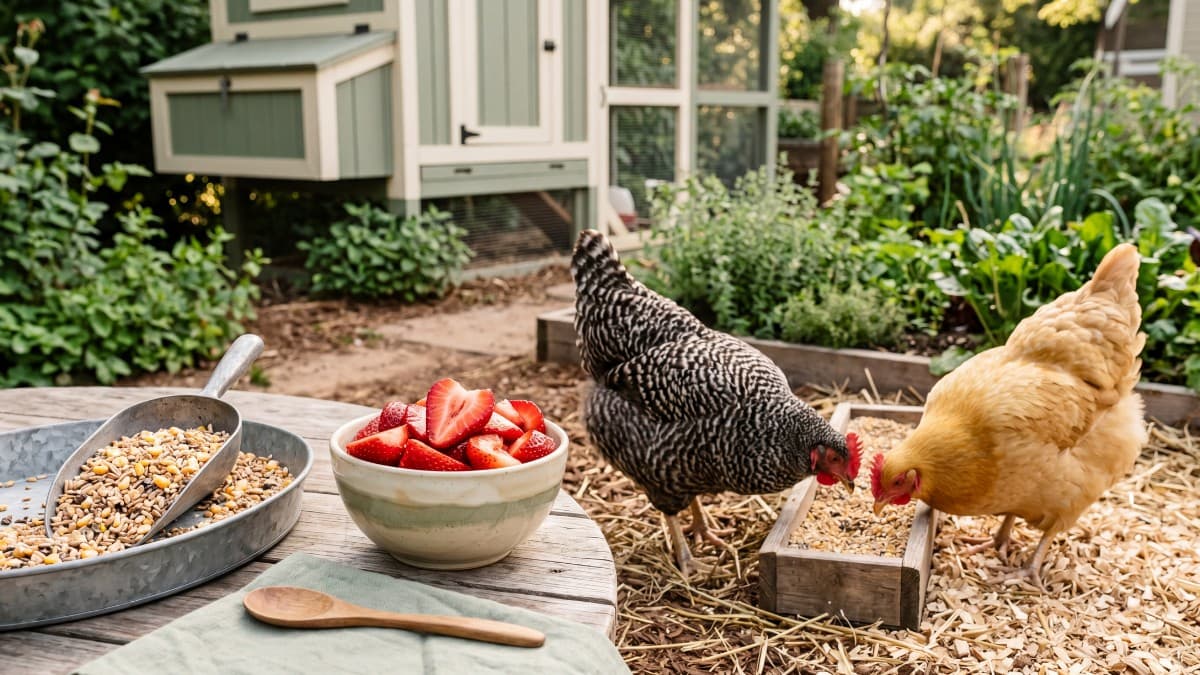
Strawberries are a highly favored and nutrient-dense treat that backyard chickens absolutely love. They are sweet, soft, and packed with beneficial vitamins and antioxidants that support flock health and vitality. However, because they are rich in natural sugars and rot quickly, keepers must serve them in moderation and clean up leftovers promptly. Leaving wet, sugary fruit in the run will attract pests and breed harmful molds. This guide covers the nutritional profile of strawberries, explains the safety of strawberry leaves, and shares practical tips for serving fresh and frozen berries. While they are highly beneficial, the soft nature of strawberries means they will spoil rapidly when left in the sun, creating an attractive nuisance for neighborhood pests. Keepers must collect any uneaten fruit before the end of the day.
The short answer
Yes, chickens can eat strawberries, including the fruit, seeds, and leafy green tops. They are completely safe and highly nutritious. Serve them raw, fresh, or frozen, and ensure they are kept plain without any added sugars or toppings. Strawberries are soft, making it easy for chickens to peck them apart without difficulty. However, because of their high natural sugar content, they must remain an occasional treat rather than a primary feed source. Feeding too many can cause digestive issues.
What strawberries offer
Strawberries are an excellent source of Vitamin C, Vitamin B9 (folate), potassium, and dietary fiber. Vitamin C supports the immune system and helps chickens cope with heat stress, while folate is essential for reproductive health and egg development. Strawberries are also rich in antioxidants, particularly anthocyanins, which give them their red color and help reduce oxidative damage in the bird's body. The high water content (about 91 percent) makes them a great hydrating snack in summer, supporting active foraging behaviors.
Strawberries also contain salicylic acid, a natural compound that has mild anti-inflammatory properties. This can be beneficial for older hens suffering from joint stiffness or general fatigue. The combination of hydration, vitamins, and antioxidants makes strawberries a highly premium seasonal treat.
Tops and leaves
The green leafy tops of strawberries (the calyx) are completely safe and healthy for chickens. They are a good source of fiber and vitamins, and chickens will eagerly peck at them. Tossing strawberry tops from your kitchen prep into the run is a great zero-waste treat. You do not need to cut the tops off the berries before serving them to your flock, as the birds will consume the entire fruit. The green leaves contain trace minerals that help diversify their nutrient intake, making them a safe green supplement.
You can also feed dried strawberry leaves during the winter months when fresh greens are scarce in the yard. Drying the leaves preserves their fiber and trace nutrients, providing a great winter supplement for your hens.
Serving size
A safe serving size is about one medium-sized strawberry or two small ones per adult hen, served two to three times a week. Because strawberries contain natural sugars, overfeeding them can lead to loose, watery droppings and crop issues. Scattering the berries widely in the run prevents resource guarding and ensures that all birds get a share of the treat. If you have a dominant hen, she will try to hoard the soft fruit, so spreading the treats out prevents fighting and bullying in the flock.
When feeding strawberries, you can also mix them with low-sugar greens like spinach or kale to create a balanced garden salad for your flock. This dilutes the natural sugar content of the berries while providing extra iron and calcium for eggshell strength.
Fresh vs frozen
Fresh strawberries are excellent, but frozen strawberries are a highly effective cooling treat in summer. You can float frozen slices in their waterer or freeze them inside a block of ice to create an engaging summer toy. If using frozen berries, slice them first to prevent choking, and ensure they are plain without any added sugar or syrup, which is common in commercial frozen fruit bags. The cold ice block keeps them busy and lowers heat stress during summer afternoon heatwaves.
Frozen strawberry blocks are also a great way to occupy your birds when they are confined to the run during quarantine or bad weather. Pecking at the ice block to release the berries keeps them busy for hours, preventing aggressive behaviors like feather-pulling.
How to prepare and serve
Wash strawberries thoroughly under cold water to remove any dirt or pesticide residues before serving. You can toss whole ripe strawberries directly into the run; because the fruit is soft, chickens can easily peck it apart. If you have younger chicks or pullets, mash the berries slightly to make them easier to swallow and prevent choking. Always serve strawberries plain without sugar, cream, chocolate, or commercial dressings, which can cause severe digestive distress.
Moldy or spoiled strawberries
You must never feed moldy, rotting, or spoiled strawberries to your chickens. Strawberries spoil quickly in warm weather, and moldy fruit can contain harmful mycotoxins that cause severe respiratory issues or sudden death in poultry. Regularly inspect the run and remove any uneaten berry pieces at the end of the day. Spoiled fruit will also attract pests like flies, yellowjackets, and mice to the coop, creating a health hazard that requires treatment.
When to avoid strawberries
Avoid feeding strawberries to baby chicks under three weeks of age, as their digestive systems are still developing and they need to focus entirely on their starter feed. You should also avoid any processed strawberry products containing added sugars, chemical preservatives, or sweeteners, such as strawberry jams, syrups, strawberry bread, or yogurt-coated treats, which can cause severe digestive upset, obesity, or sour crop. If your hens suffer from chronic loose droppings or diarrhea, temporarily remove strawberries and other high-moisture fruits from their diet. Finally, always avoid strawberries sourced from gardens or farms that have been sprayed with systemic pesticides or chemical fertilizers that cannot be washed off, as these chemicals can accumulate in their bodies and affect egg safety.
Where treats fit
Strawberries should make up only a small fraction of the 10 percent treat allowance. The remaining 90 percent of their daily intake must consist of complete commercial layer feed. For a detailed breakdown of feed requirements, read our chicken feed guide by age.
Maintaining this balance ensures they receive the calcium and protein required for strong eggshells and daily health. For other berry safety guides, see can chickens eat blueberries and can chickens eat grapes. Keep their core feed high-quality.
Frequently Asked Questions
Quick, practical answers to common questions about feeding this to chickens.
About the Author

Amy Schmelter is a lifelong chicken keeper raising a large flock in Florida and the author of the upcoming book What I Wish I Knew Before Getting Chickens. She started Chicken Homestead to share what actually works.
Disclosure
Some links on Chicken Homestead may be affiliate links. We only recommend products we’d use ourselves. See our affiliate disclosure for details.