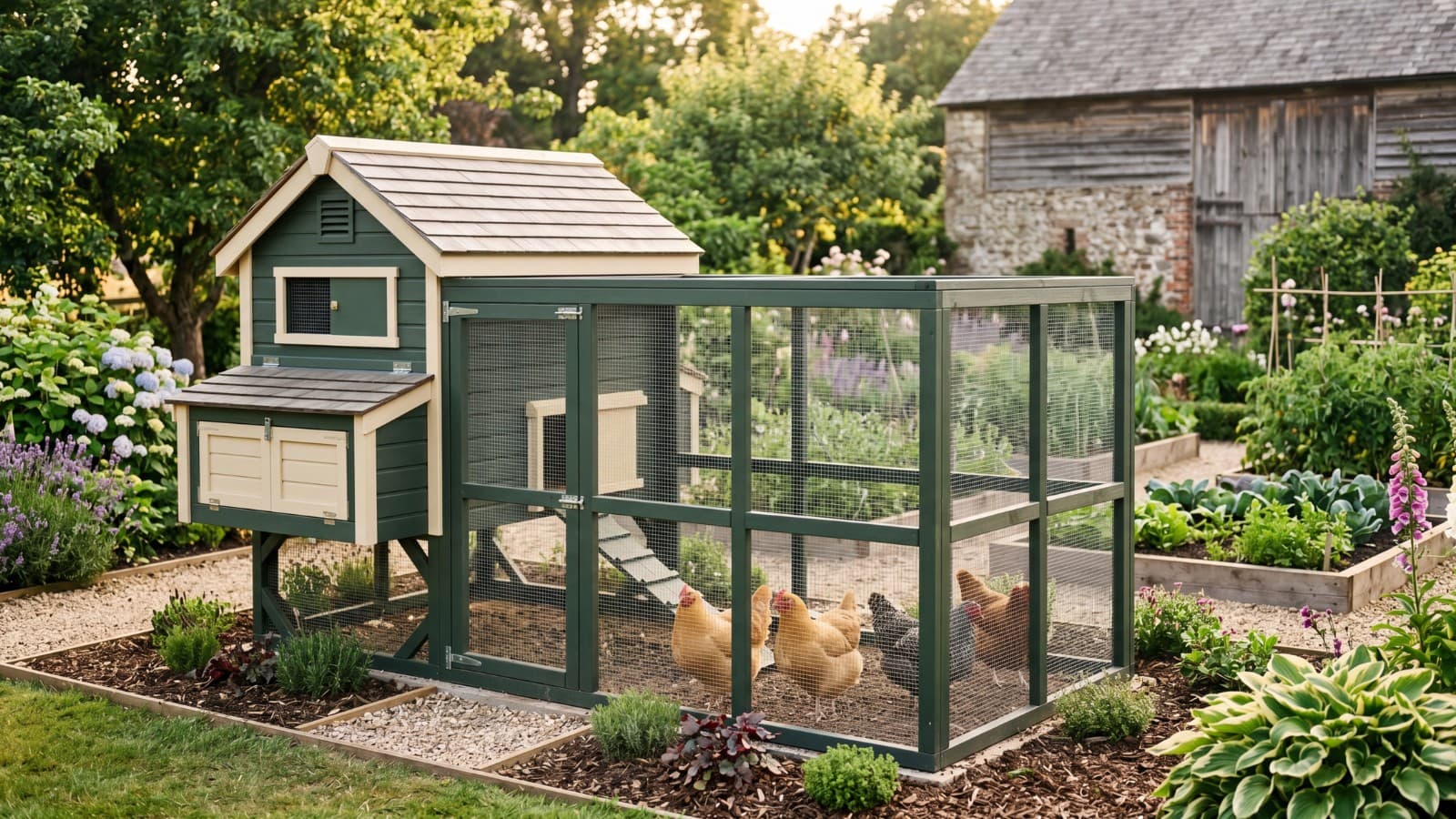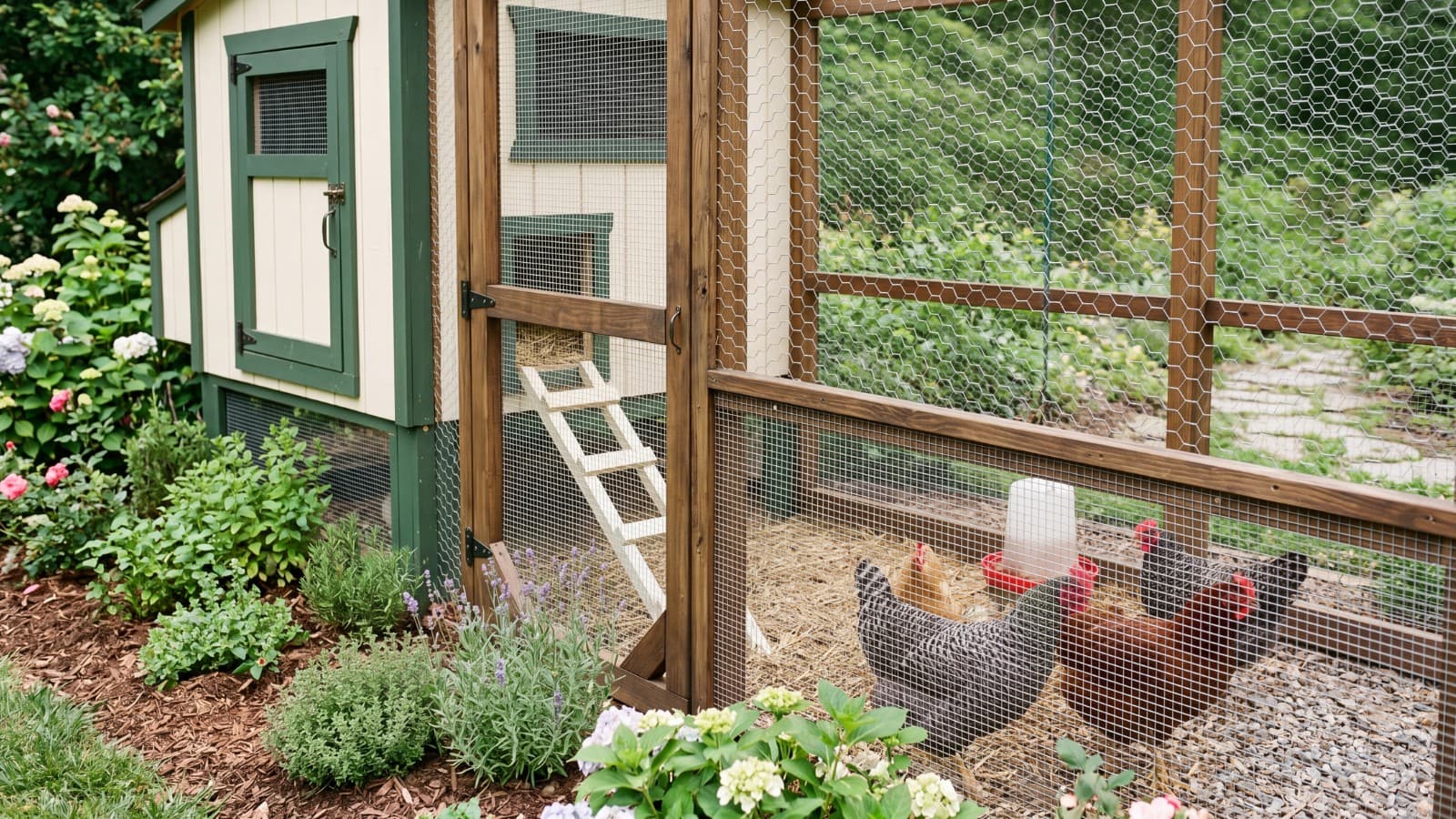
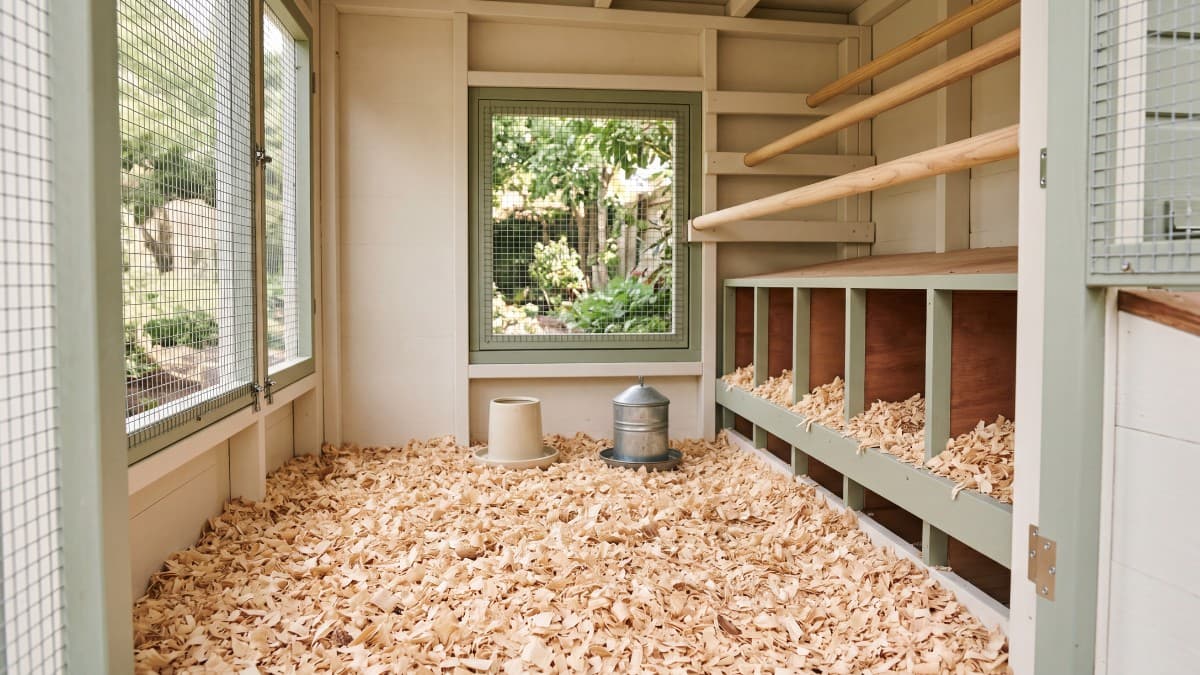
A clean chicken coop is the difference between a healthy flock and a string of avoidable problems. The good news is that keeping it clean does not mean scrubbing every day. With a simple rhythm of daily, weekly, monthly, and seasonal jobs, you can spend less time on chores and still keep your birds in great shape. This guide walks through a practical cleaning schedule that works for most backyard coops.
The basic rhythm
Coop cleaning splits naturally into four time scales:
- Daily: Quick checks and small refreshes.
- Weekly: Bedding turn, dropping board cleanup, waterer rinse.
- Monthly: Deeper bedding refresh, feeder scrub, full visual inspection.
- Seasonal: Full cleanout, hardware check, and preventative pest treatment.
For broader coop setup, see our chicken coops guides and what should be inside a chicken coop.
Daily quick checks
Five minutes, no scrubbing required.
- Refresh water. Dump, rinse, refill if needed.
- Top up feed. Check that feed is dry and not caked in the corners of the feeder.
- Collect eggs. Helps prevent broken eggs and egg-eating habits.
- Quick visual flock check. Are the birds bright, alert, walking normally, and pooping normally?
- Lock the coop at sundown. Predators rarely care that you are tired.
See our chicken care guides for what a daily routine looks like beyond cleaning.
Weekly bedding and dropping cleanup
A 15 to 30 minute job that prevents most coop problems before they start.
- Stir or turn the bedding. Dry shavings and droppings get folded under, fresh layer comes up.
- Scrape dropping boards (if you use them). Most droppings happen overnight under the roost. A dropping board catches them and saves bedding.
- Add a thin layer of fresh bedding. Pine shavings, hemp, or chopped straw all work.
- Rinse and scrub the waterer. Even nipple waterers benefit from a weekly rinse. See our chicken waterer guide.
- Refresh nest box bedding if it looks soiled.
Monthly deeper cleaning
An hour or so. Pick a dry day if you can.
- Top-up the bedding more aggressively, or do a partial change-out if the deep-litter method is not working as planned.
- Wipe roost bars. Use a damp cloth or a scraper. Pay attention to cracks where mites can hide.
- Scrub the feeder. Empty completely, wash with warm soapy water, rinse, dry, and refill.
- Inspect hardware cloth and latches. A loose staple or worn latch is the kind of small problem that invites a predator. See chicken wire vs hardware cloth.
- Look under the wings of two or three birds. Catch parasites before they spread. See our chicken mites guide.
Seasonal cleaning
Two to four times a year, depending on climate. Spring and fall are the natural anchors. A summer cleanout helps in hot climates, and a midwinter touch-up makes sense in places with long, wet seasons.
A typical seasonal cleanout:
- Empty the coop completely. Bedding, feed, water, removable accessories. Compost the bedding if it is not heavily soiled with anything you would not want on the garden.
- Sweep and scrape every surface. Roosts, walls, corners, nest boxes, and the floor.
- Wash with warm water and a mild cleaner. A diluted vinegar solution works well. Skip harsh chemicals indoors with chickens.
- Let everything dry fully before adding fresh bedding. A damp coop is worse than a dirty one.
- Add fresh bedding and bedding to the nest boxes.
- Inspect the run, fence, and predator protection. Look for new gaps, loose hardware cloth, or signs of digging.
- Apply preventative pest treatment if needed (food-grade diatomaceous earth in cracks, or a poultry-safe spray on roost bars). Use sparingly and follow the label.
Nesting box maintenance
Nest boxes deserve attention beyond regular bedding refresh. Eggs pick up flavors and bacteria from the nest, so cleanliness here pays off.
- Check daily for soiled bedding when collecting eggs.
- Refresh weekly. Pull out the top inch of bedding and replace it.
- Scrub and dry monthly. Or sooner if a hen sleeps in a box and leaves droppings.
- Replace heavily soiled bedding right away. A hen will not lay in a wet or stinky box, and a clean box keeps eggs cleaner without washing.
Feeders and waterers
- Feeders. Keep dry. Wipe weekly, scrub monthly. Replace if you see mold or persistent caking. Hanging or treadle feeders stay cleaner than open dishes.
- Waterers. Rinse weekly, scrub monthly, sanitize seasonally. Cup and nipple waterers stay clean longest. See our chicken waterer guide.
- In summer. Algae grows fast in warm water. Bump waterer cleaning up a step.
- In winter. Heated waterers prevent freezing but can build up mineral scale. Add a quarterly descaling scrub.
Odor and moisture control
A coop that smells bad is usually telling you something specific: too much moisture. The fix is not more cleaning; it is better airflow and drier bedding.
- Check that vents up high are clear and not blocked.
- Avoid putting waterers inside the coop if you can help it.
- Use absorbent bedding (pine shavings, hemp) and add a fresh top layer when you smell ammonia.
- Do not seal a coop tight against winter cold. Damp air kills more flocks than cold ever does.
Fly control
Flies are the most common pest issue, especially in summer. Manage them at the source.
- Clean dropping boards every few days in hot weather.
- Compost coop waste away from the coop, not next to it.
- Keep feed dry and contained. Spilled wet feed feeds flies.
- Hang fly traps a short distance from the coop, not inside. Inside-coop traps usually attract more flies.
- Add fly predators (small parasitic wasps) if your area gets heavy fly pressure. They are sold as a release-and-forget biological control.
Mite and pest warning signs
Watch for:
- Small black or red specks at the base of feathers, especially near the vent.
- Hens scratching more than usual or refusing to roost.
- Pale combs and weight loss across the flock.
- Live mites visible on roost bars after dark.
- Rodent droppings or chewed feed bags near the coop.
Catching parasites early makes treatment easy. See our chicken mites guide for detection and treatment.
What not to overdo
Over-cleaning can be its own problem. A few things to skip:
- Daily full cleanouts. Unnecessary, stressful for the flock, and wasteful of bedding.
- Bleach. Harsh on chicken lungs in confined spaces. Stick to vinegar or poultry-specific cleaners.
- Wet cleaning right before bedtime. A damp coop overnight invites respiratory issues.
- Heavy diatomaceous earth dosing inside the coop. Useful in cracks and dust baths, but airborne DE is hard on chicken (and human) lungs.
- Pressure washing the inside. Hard to dry fully, and can damage wood seals.
How to keep a coop cleaner longer
- Use deep litter or sand. Both reduce how often you do a full cleanout. Deep litter composts in place; sand drains and sifts cleanly.
- Install a dropping board under the roost. Catches the heaviest waste and saves the bedding underneath.
- Hang the feeder at hen-back height. Less spillage, less wasted feed, fewer pests.
- Keep feed and water out of the coop when possible. Drier coop, less mess, easier cleaning.
- Cover the run. A roof on the run keeps bedding drier and the coop cleaner.
- Add a dust bath in the run. Hens dust bathe daily. A good dust bath outside means less dust inside the coop.
A clean coop is mostly small, steady habits. If you want a printable daily, weekly, monthly, and seasonal cleaning checklist to pin near the coop, the Chicken Homestead Checklist Bundle includes a coop cleaning checklist alongside daily care and seasonal routines.
Frequently Asked Questions
Quick, practical answers to common questions about feeding this to chickens.
About the Author

Amy Schmelter is a lifelong chicken keeper raising a large flock in Florida and the author of the upcoming book What I Wish I Knew Before Getting Chickens. She started Chicken Homestead to share what actually works.
Disclosure
Some links on Chicken Homestead may be affiliate links. We only recommend products we’d use ourselves. See our affiliate disclosure for details.