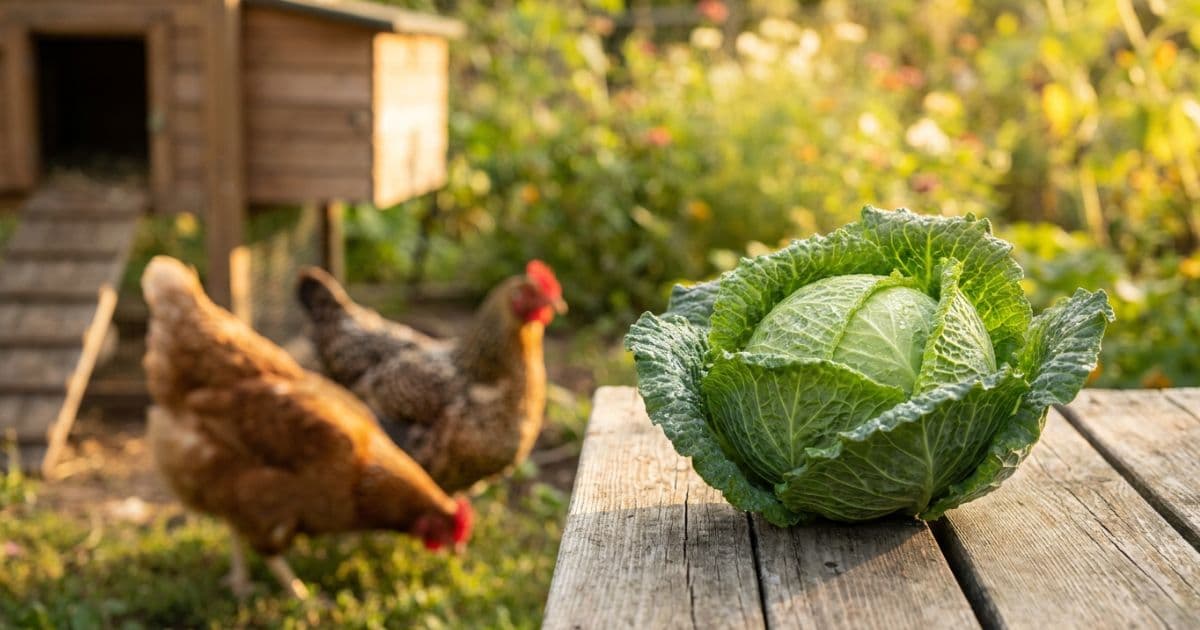
Cabbage is a cheap, nutritious cruciferous vegetable that backyard chicken keepers love to use as a treat. In addition to its excellent vitamin content, cabbage has a firm texture that makes it perfect for coop entertainment. This guide outlines the nutritional benefits of cabbage, explains how to set up a "cabbage piñata" to prevent flock boredom, and details how to serve it safely.
When chickens are confined during winter or bad weather, they can develop behavioral issues like feather pecking. Offering a whole cabbage is one of the most effective ways to redirect their energy and maintain peace in the coop.
The short answer
Yes, chickens can eat cabbage safely. Green, red, and savoy cabbages are all non-toxic and healthy. For best results, serve it raw to provide exercise and mental stimulation. For more information on safe treats, see our guide on what do chickens eat.
Cabbage is low in calories and sugar, but it is still a treat. It must be fed in moderation and must not replace complete commercial feed.
Is cabbage safe for chickens?
Yes, cabbage is fully safe and packed with Vitamin K, Vitamin C, Vitamin B6, folate, manganese, and fiber. Vitamin K supports bone development and blood clotting, while folate and manganese are essential for reproductive health and eggshell formation. The dietary fiber supports healthy digestion.
Red cabbage also contains anthocyanins, which are powerful antioxidants that support immune health. Because cabbage has a high water content and low sugar levels, it is a healthy option that will not cause weight gain when fed in moderation.
How to serve cabbage to your flock
Raw cabbage is preferred because its crunchiness lasts longer and provides better exercise. The most popular method is to make a "cabbage piñata": drill a hole through the center of a cabbage head, thread a sturdy rope through it, and hang it in the run. Hang it just high enough so the chickens have to stretch or hop to peck it.
You can also shred cabbage raw and scatter it in the run, or mix it with grated carrots and other greens in a feeding dish.
Cooked cabbage is safe, but it loses its structural strength and some of its vitamins during cooking. If serving cooked cabbage, ensure it has cooled completely and is plain.
What parts of cabbage should chickens avoid?
All parts of the cabbage—including the outer leaves, core, and stalks—are safe for chickens. However, you must avoid feeding cabbage that has been prepared with salt, bacon grease, butter, or seasonings (such as leftover coleslaw). Salt is toxic to chickens, and excess fats can lead to fatty liver disease.
Never feed moldy, rotting, or slimy cabbage. Spoilage can introduce mycotoxins or harmful bacteria that cause digestive upset or crop infections.
How much cabbage can chickens eat?
A single cabbage head is enough for a flock of 6 to 8 chickens to peck at over several days. If you serve shredded cabbage, offer about one cup of cabbage per 4 hens, two or three times a week.
Remove any leftover cabbage pieces from the coop if they become soiled with manure or begin to rot. Wet cabbage left on the coop floor can create odors and attract pests.
Introducing cabbage to your flock
Scatter a few shredded cabbage leaves in the run to let them taste the cabbage. Once they recognize it as food, you can introduce a whole hanging head.
Keep a close eye on their behavior to ensure there is no fighting over the hanging cabbage.
Signs of digestive distress
Cruciferous vegetables can cause gas and diarrhea if overfed. If you notice watery stools or foul-smelling droppings, stop feeding cabbage.
Ensure the chickens always have access to dry layer feed and fresh water.
Where cabbage fits in a balanced diet
Cabbage should make up only a small part of the 10 percent treat allowance. The remaining 90 percent of their daily intake must consist of complete commercial layer feed. For a detailed breakdown of age-appropriate feeds, read our chicken feed guide by age.
Ensuring your flock receives balanced nutrition is vital for their health. For other treat safety guides, see can chickens eat mango and can chickens eat mushrooms.
Frequently Asked Questions
Quick, practical answers to common questions about feeding this to chickens.
About the Author

Amy Schmelter is a lifelong chicken keeper raising a large flock in Florida and the author of the upcoming book What I Wish I Knew Before Getting Chickens. She started Chicken Homestead to share what actually works.
Disclosure
Some links on Chicken Homestead may be affiliate links. We only recommend products we’d use ourselves. See our affiliate disclosure for details.