Mango is a sweet, tropical fruit that can be a delicious treat for backyard chickens. However, its high sugar content and the physical hazard of its large pit require careful management by chicken keepers. This guide details how to serve mango flesh safely, the potential risks of mango skins, and how to avoid digestive issues in your flock.
Chickens love soft, sweet fruits, and mango is a major favorite. When served in moderation, mango provides a great burst of hydration and vitamins, making it an excellent occasional treat.
The short answer
Yes, chickens can eat ripe mango flesh safely. You should remove the large pit to prevent choking, and feed the skin only in small amounts. Serve the mango plain and ripe. To learn more about safe treat guidelines, see our guide on what do chickens eat.
Because mango is rich in natural sugars, it must be offered sparingly. Overfeeding sweet fruits can disrupt their digestion and cause health issues.
Is mango safe for chickens?
Yes, ripe mango flesh is safe and packed with Vitamin A, Vitamin C, Vitamin B6, folate, and potassium. Vitamin A supports eye health and immune function, Vitamin C helps with stress management, and potassium is essential for fluid balance and muscle function.
Mangoes also contain beneficial antioxidants and dietary fiber. However, they are high in fructose, which can cause digestive issues if consumed in large quantities.
How to serve mango to your flock
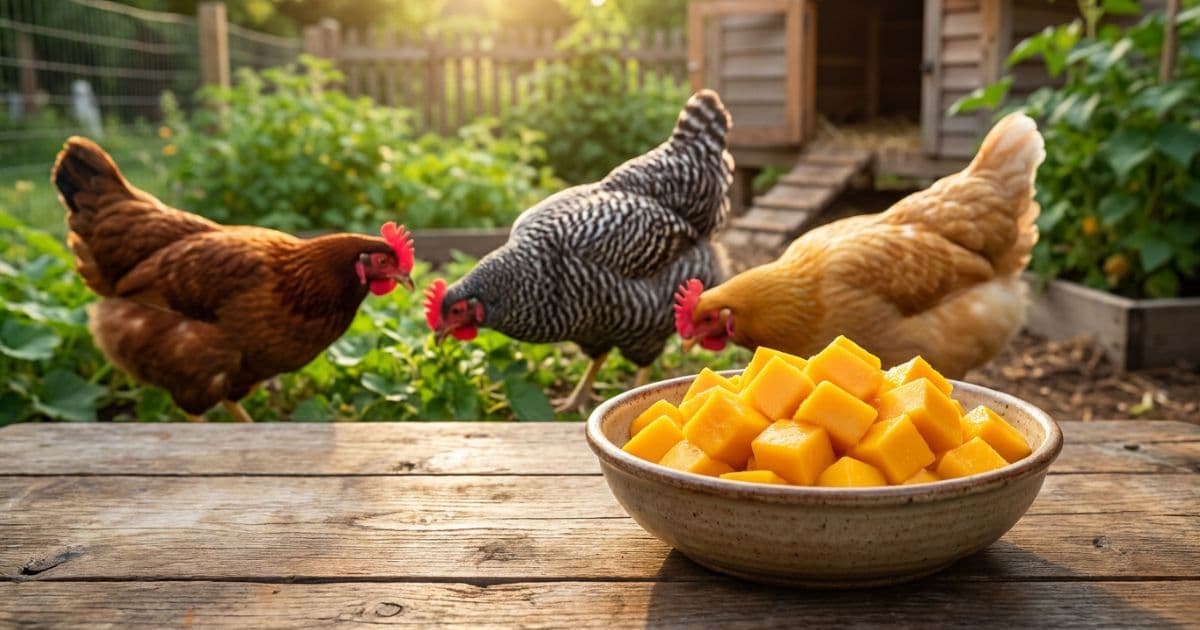
Serve mango raw and fresh. You can slice the flesh off the pit and chop it into small, manageable pieces. Toss the pieces directly into a clean dish or scatter them in the run.
You can also hang a mango slice from a veggie hanger to keep the chickens active. In hot weather, frozen mango chunks make a refreshing, cooling treat that helps keep the flock hydrated.
Always ensure you peel the mango or wash the skin thoroughly if you choose to include small skin pieces.
What parts of mango should chickens avoid?
You must remove the large, fibrous mango pit before serving. The pit is slippery and represents a major choking and crop obstruction hazard if a chicken tries to swallow it whole.
Mango skin contains small amounts of urushiol, the same compound found in poison ivy. While chickens are not typically sensitive to it, some birds can experience mild skin or beak irritation. The skin is also tough and hard to digest, so it is best to peel the fruit.
Avoid mangoes cooked with sugar, syrup, or alcohol. Also, skip dried mangoes, as their sugar content is too concentrated.
How much mango can chickens eat?
Limit mango to about one tablespoon of chopped flesh per adult hen, once or twice a week. Feeding too many sugary treats can cause sour crop, a condition where yeast overgrows in the crop. It can also lead to watery droppings and obesity.
Clean up any leftover mango pieces from the run after an hour. Sweet tropical fruits spoil quickly and will attract flies, wasps, ants, and rodents to the coop.
Introducing mango to your flock
To introduce mango, offer a few small cubes of ripe fruit in a clean feeding dish. Observe the flock; they will likely be drawn to the bright yellow color.
Do not feed sweet fruits to chicks, whose crops and gizzards are not fully equipped to process heavy sugars.
Signs of digestive issues
Watch for signs of sour crop or yeast overgrowth, such as a squishy, fluid-filled crop that smells sour when you gently massage it. Watery stools are another indicator of excess sugar.
If you observe these symptoms, remove the fruit, clean the waterers, and provide plain layer feed.
Where mango fits in a balanced diet
Mango should make up only a small part of the 10 percent treat limit. The remaining 90 percent of their daily intake must consist of complete commercial layer feed. For a complete schedule of age-appropriate feeds, read our chicken feed guide by age.
Prioritizing their main feed ensures they receive the calcium and protein needed for consistent egg production. For other treat safety guides, see can chickens eat mushrooms and can chickens eat green beans.
Frequently Asked Questions
Quick, practical answers to common questions about feeding this to chickens.
About the Author

Amy Schmelter is a lifelong chicken keeper raising a large flock in Florida and the author of the upcoming book What I Wish I Knew Before Getting Chickens. She started Chicken Homestead to share what actually works.
Disclosure
Some links on Chicken Homestead may be affiliate links. We only recommend products we’d use ourselves. See our affiliate disclosure for details.