Bell peppers are vibrant, nutrient-dense fruits that can be a healthy addition to a chicken's diet. However, because bell peppers belong to the nightshade family, keepers must distinguish between the safe fruit flesh and the toxic parts of the plant. This guide covers the safety of bell pepper flesh and seeds, the danger of nightshade foliage, and how to serve peppers safely.
Chickens are naturally drawn to bright colors, and red, yellow, and orange bell peppers are highly appealing to them. Feeding peppers is a great way to add visual variety to their run while providing a boost of beneficial antioxidants.
The short answer
Yes, chickens can eat bell pepper flesh and seeds safely. The leaves, stems, flowers, and vines of the bell pepper plant contain solanine, a toxic glycoalkaloid, and must never be fed to your flock. Serve only the ripe fruit flesh and seeds, and keep them plain. For more information on safe treats, see our guide on what do chickens eat.
Ensure that bell peppers are fed in moderation as an occasional snack. Ripe peppers are healthy, but they cannot replace the balanced nutrition provided by complete commercial feeds.
Are bell peppers safe for chickens?
Ripe bell peppers are safe and highly nutritious. They are a rich source of Vitamin C, Vitamin A, Vitamin B6, and potassium. Vitamin C supports the immune system and helps chickens cope with heat stress, while Vitamin A is essential for healthy eyes, skin, and respiratory tracts. Potassium plays a key role in fluid balance and muscle function.
The seeds inside bell peppers are entirely non-toxic and provide dietary fiber and essential fatty acids. Chickens will actively peck at the seeds and the spongy white pith, enjoying both the texture and the taste. The antioxidants in red and orange peppers also help support cell health and feather condition.
Carotenoids present in ripe bell peppers can also enhance yolk coloration. Feeding red peppers can lead to deep, vibrant orange egg yolks over time.
How to serve bell peppers to your flock
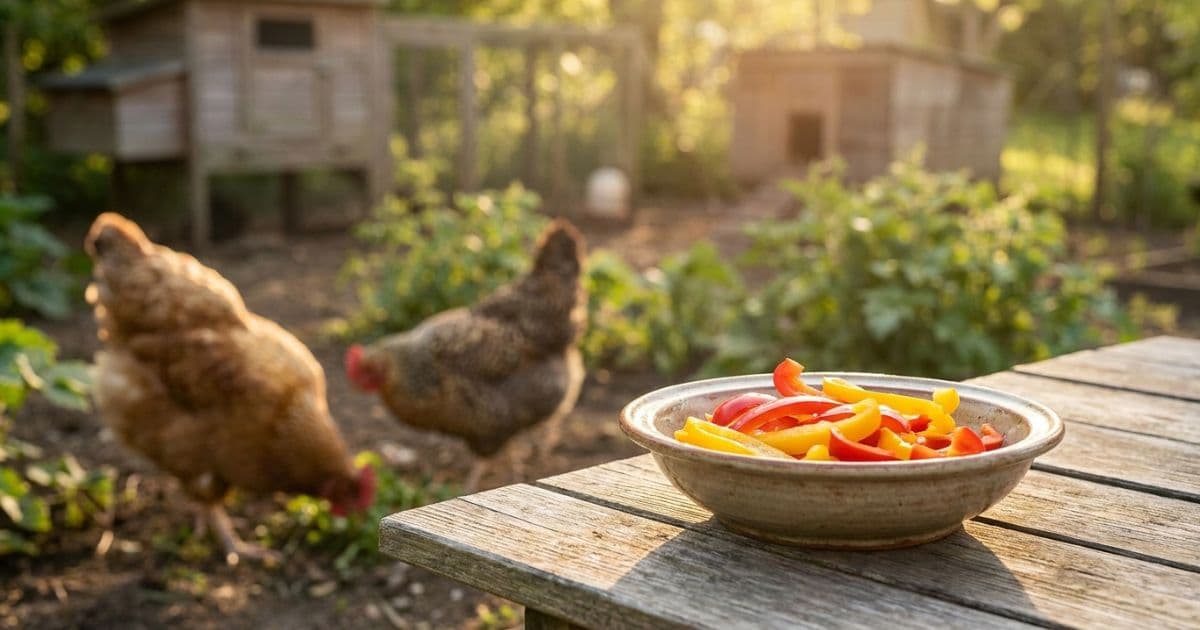
Serve bell peppers raw to preserve their Vitamin C content, which degrades when heated. You can cut the pepper in half and toss it directly into the run, allowing the chickens to peck out the seeds and flesh. You can also chop the pepper into small pieces and mix it with other safe vegetables.
During hot summer weather, you can freeze chopped bell pepper pieces in water to create a cooling, hydrating ice block for your flock. This helps keep their core temperature down and prevents heat-related stress.
Always ensure the peppers are washed thoroughly to remove any pesticide residues before serving.
What parts of bell peppers should chickens avoid?
You must prevent chickens from eating the leaves, stems, flowers, and green vines of the bell pepper plant. If you grow bell peppers in your garden, fence off the patch so the flock cannot forage there.
Avoid feeding green, unripened bell peppers in large quantities, as they contain higher levels of solanine than fully ripe red, yellow, or orange peppers. Also, skip any peppers that have been cooked with salt, butter, garlic, onions, or salad dressings.
How much bell pepper can chickens eat?
Limit bell peppers to a few small slices or a tablespoon of chopped pepper per hen, two or three times a week. This portion size provides the benefits of the fruit without causing digestive issues or watery stools from excess water intake.
Clean up any leftover pepper pieces at the end of the day. Sweet fruits rot quickly in the run, which can attract flies, ants, and mice, and pose a health risk if mold develops.
Introducing bell peppers to your flock
When introducing bell peppers for the first time, slice a ripe pepper in half and lay it face up in the run. This allows the chickens to see the seeds and pith, which will quickly draw their interest. Observe their behavior; most flocks will explore it within minutes.
Only introduce bell peppers to birds that have reached laying age. Do not feed nightshade-related fruits or scraps to growing chicks.
Signs of digestive distress
Watch for signs of digestive upset, such as watery, loose stools or a sudden drop in feed consumption. If you feed too much watery fruit like peppers, it can cause diarrhea and make coop management more difficult.
If you observe any lethargy, respiratory issues, or changes in comb color, remove the peppers immediately. Ensure they have access to dry, balanced layer feed and fresh water.
Where bell peppers fit in a balanced diet
Bell peppers should make up only a small fraction of the 10 percent treat allowance. The remaining 90 percent of their daily diet must consist of complete commercial layer feed, which is formulated with the correct protein and calcium ratios. For more details on age-appropriate diets, read our chicken feed guide by age.
Maintaining this balance prevents nutritional deficiencies and supports steady egg production. For other guides in the nightshade family, see can chickens eat potatoes and can chickens eat tomatoes.
Frequently Asked Questions
Quick, practical answers to common questions about feeding this to chickens.
About the Author

Amy Schmelter is a lifelong chicken keeper raising a large flock in Florida and the author of the upcoming book What I Wish I Knew Before Getting Chickens. She started Chicken Homestead to share what actually works.
Disclosure
Some links on Chicken Homestead may be affiliate links. We only recommend products we’d use ourselves. See our affiliate disclosure for details.