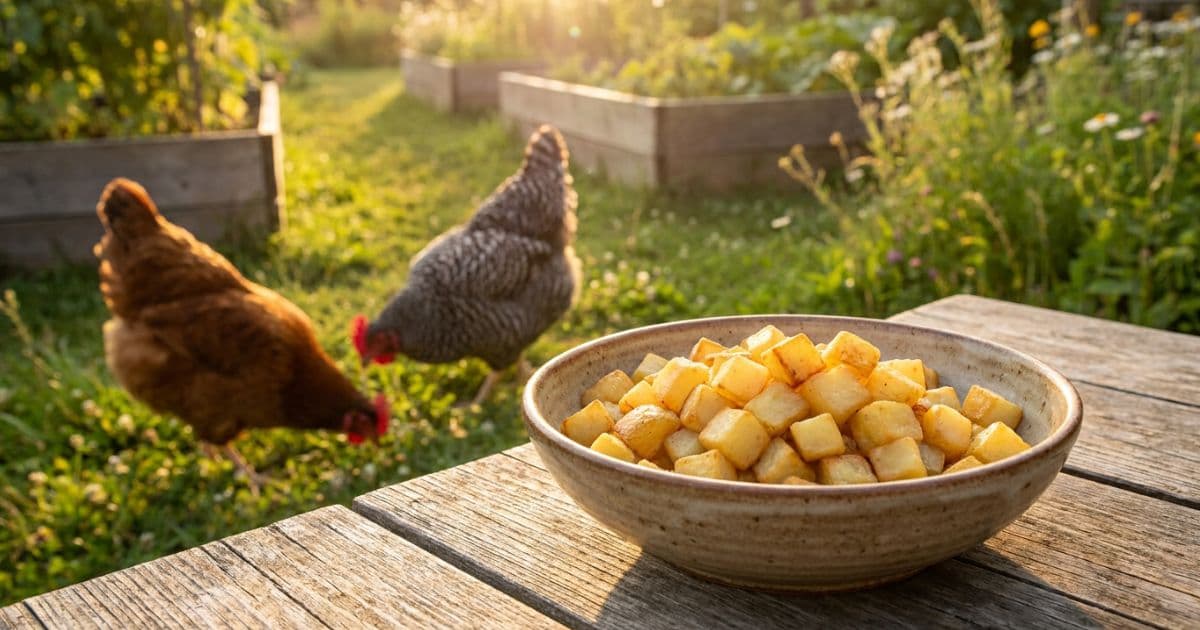
Avoid raw potatoes, green skins, and potato sprouts completely. Potatoes are starch-heavy tubers that can be fed to chickens, but only under strict conditions. Raw potatoes and any green parts of the potato plant contain solanine, a potent glycoalkaloid toxin that is highly poisonous to poultry. This guide explains how to prepare potatoes safely and how to protect your flock from solanine poisoning.
As members of the nightshade family, potato plants use solanine as a natural defense mechanism to deter pests and herbivores. While humans can tolerate trace amounts, the small body mass of chickens makes them highly vulnerable to this toxin. Understanding the risks associated with nightshades is vital for any backyard chicken keeper.
Why raw potatoes are toxic to chickens
Raw potatoes, potato skins (especially green ones), sprouts, leaves, and stems contain high levels of solanine and chaconine. These glycoalkaloids damage the chicken's digestive system and disrupt their nervous system. Ingesting toxic amounts of solanine can cause severe diarrhea, paralysis, respiratory distress, and sudden death.
Cooking potatoes at high temperatures breaks down a significant portion of the solanine, rendering the white flesh safe for consumption. However, cooking does not make green potato skins or sprouts safe, as their solanine concentration is far too high. If a potato has green patches or sprouts, it should be thrown away, not cooked for your birds.
Solanine is also stable at high temperatures, meaning standard boiling or baking will not eliminate it if the potato is green or sprouting. Keep nightshades out of reach of your birds to prevent accidental poisoning.
The short answer
Chickens can eat potatoes, but only if they are thoroughly cooked and free of any green parts or sprouts. Raw potatoes are toxic and must never be fed to your flock. Always boil, bake, or steam potatoes completely plain before serving. For a general overview of safe flock feeding practices, read our guide on what do chickens eat.
Even when cooked, potatoes are starch-dense and low in protein. They should only be offered in tiny amounts as an occasional treat. Overfeeding cooked potatoes can lead to obesity and other serious health issues, so they must be managed carefully.
How to serve potatoes safely
Always peel potatoes to remove the skin before cooking, as this eliminates the part most likely to carry trace toxins. Boil, bake, or steam the plain white potato flesh until it is completely soft and cooked through. You must never add salt, butter, milk, oil, cheese, or spices, as these ingredients can cause severe kidney and digestive issues in birds.
Allow the cooked potatoes to cool completely to room temperature before offering them to your chickens. Warm or hot food can cause crop burns, which are painful and can lead to secondary infections. Mash the cooled, plain potatoes slightly to make them easy for the flock to peck and swallow.
What parts of potatoes should chickens avoid?
You must discard green potato skins, sprouts (eyes), leaves, vines, and stems, raw or cooked. Keep your chickens away from potato patches in the garden, as they will naturally forage and may peck at the toxic foliage.
If you have sweet potatoes, they are completely safe to feed to chickens raw or cooked. Sweet potatoes belong to a different botanical family (Convolvulaceae) and do not contain solanine. However, they are still starch-heavy and should be fed in moderation.
How much cooked potato can chickens eat?
Cooked potato should be offered in very limited quantities. A good portion size is about one tablespoon of plain mashed potato per adult hen, once a week at most. Because potatoes are rich in simple carbohydrates, overfeeding them will quickly lead to fat accumulation, which can cause fatty liver hemorrhagic syndrome in laying hens.
If your chickens do not finish the cooked potato within an hour, clean up the leftovers. Cooked potatoes spoil quickly when left outdoors, and moldy starch can harbor dangerous pathogens that cause sour crop or respiratory infections.
Introducing potatoes to your flock
If you decide to feed cooked potatoes to your flock, introduce them slowly. Start with a tiny spoonful of cooled, mashed potato mixed with their regular feed. Observe the birds over the next 24 hours to ensure they do not show any signs of digestive discomfort, and check that their crops empty normally by the following morning.
Only introduce cooked potatoes to mature, healthy adult birds. Young chicks have highly delicate digestive tracts and should never be fed starch-heavy kitchen scraps.
Signs of solanine poisoning
If you suspect your chickens have consumed raw potatoes or green skins, watch closely for symptoms of solanine poisoning. Early signs include severe lethargy, weakness, and loss of appetite. As the toxicity progresses, chickens may display watery diarrhea, labored breathing, or a pale, bluish comb.
In severe cases, solanine poisoning leads to paralysis of the legs or wings, followed by sudden death. If you see any of these signs, remove all food sources immediately, provide clean water, and contact an avian veterinarian if possible.
Where potatoes fit in a balanced diet
Cooked potatoes are a low-protein, high-starch treat and must stay within the 10 percent treat limit. The remaining 90 percent of their daily intake must consist of complete commercial layer feed to ensure they receive the protein, calcium, and vitamins needed for egg laying. For more information on feed schedules, view our chicken feed guide by age.
Laying hens require consistent calcium to produce strong eggshells. Feeding too many starchy treats like potatoes can dilute their calcium intake. For details on other nightshade foods to handle with care, read our guides on can chickens eat tomatoes and can chickens eat onions.
Frequently Asked Questions
Quick, practical answers to common questions about feeding this to chickens.
About the Author

Amy Schmelter is a lifelong chicken keeper raising a large flock in Florida and the author of the upcoming book What I Wish I Knew Before Getting Chickens. She started Chicken Homestead to share what actually works.
Disclosure
Some links on Chicken Homestead may be affiliate links. We only recommend products we’d use ourselves. See our affiliate disclosure for details.