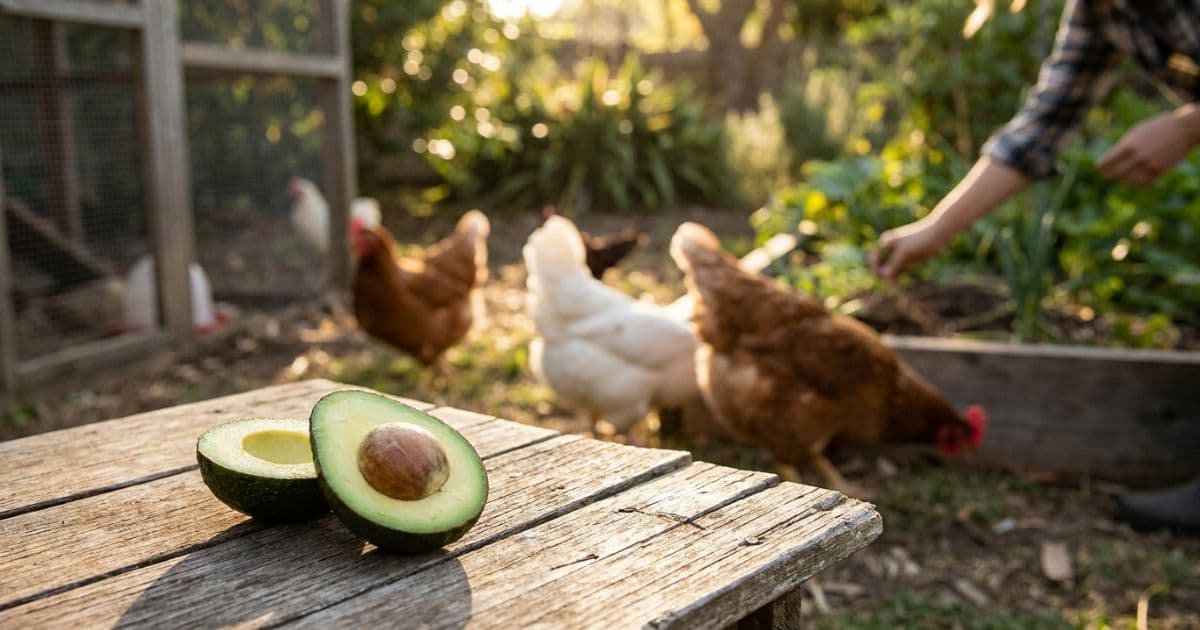
Avoid feeding avocado to chickens entirely. Avocado skin, pits, leaves, bark, and stems contain a fungicidal toxin called persin, which is highly toxic to poultry. Even small amounts can cause respiratory distress, myocardial necrosis (heart tissue damage), and sudden death in birds. This guide explains why avocados are dangerous, the symptoms of poisoning, and safer alternatives.
While some backyard keepers claim to feed avocado flesh without issues, the risk of contamination is extremely high. Persin from the skin and pit easily leaks into the surrounding green flesh during handling, slicing, and ripening, making it unsafe for chickens.
Why avocado is dangerous to chickens
Avocados contain persin, a toxin that is harmless to humans but highly poisonous to birds, rabbits, horses, and goats. In chickens, persin causes necrosis of the cardiac muscle fibers, preventing the heart from pumping blood effectively.
This leads to fluid accumulation in the lungs and chest cavity (congestive heart failure), which is often fatal within 24 to 48 hours of ingestion. Because of their fast metabolism and small body mass, poultry are highly susceptible to persin poisoning.
The short answer
Skip avocados completely. No part of the avocado—skin, pit, leaves, or flesh—should ever be fed to your chickens. The risk of poisoning is too high, and the consequences are often fatal. For a list of safe kitchen scraps, see our guide on what do chickens eat.
Keep all avocado scraps out of the compost bin if your chickens have access to it. Chickens will naturally forage through compost and may consume the skin or pit.
Which parts of the avocado contain persin?
Persin is concentrated in the avocado leaves, bark, stem, pit, and skin. Guatemalan varieties of avocado (which are common in grocery stores) contain particularly high levels of this toxin.
As the fruit ripens, some persin can leach into the flesh near the skin. Because of this, no part of the avocado should be considered safe for poultry. Always ensure that avocado remains completely out of reach of your flock.
Symptoms of avocado poisoning in chickens
Chickens that ingest toxic amounts of avocado will show symptoms of respiratory failure within a few hours. Watch for:
- Lethargy, weakness, and fluffing of feathers.
- Difficulty breathing, rapid panting, or gasping.
- A pale or bluish comb and wattles (cyanosis due to lack of oxygen).
- Inability to stand, walk, or fly.
- Sudden death with no prior symptoms.
Safer kitchen scrap alternatives
If you want to feed kitchen scraps to your flock, stick to fully safe fruits like melons, bananas, and berries. Ensure that commercial layer feed makes up 90% of their daily diet. Check out our chicken feed guide by age.
For more guides on foods to handle with care or avoid entirely, read our guides on can chickens eat onions and can chickens eat potatoes.
Frequently Asked Questions
Quick, practical answers to common questions about feeding this to chickens.
About the Author

Amy Schmelter is a lifelong chicken keeper raising a large flock in Florida and the author of the upcoming book What I Wish I Knew Before Getting Chickens. She started Chicken Homestead to share what actually works.
Disclosure
Some links on Chicken Homestead may be affiliate links. We only recommend products we’d use ourselves. See our affiliate disclosure for details.